With the end of June coming soon the monsoon season has showered on many a occasions to make out lives fresh and delightful from the rage of summer. Here at Maac Kolkata we celebrates Ratha Yatra competition being held at the centre.

Monsoon, the queen of seasons is not just an ordinary season.
It brings delight to many a faces; the farmers look forward for this season as their silver lining, the availability of fresh water in water bodies like ponds and river; and the underground water table, with all of these factors cumulatively contributing to the health of the economy of India.
Monsoon brings many a joy, like the increase of Hilsa the tastiest fish ever, then there is the famous Rath Yatra scheduled to be held in Odisha’s pilgrim town Puri held hugely every year, where people from all across the country try to visit just to get a touch of the ropes of the chariots pulled from the Jagannath Temple.
Many a mythical tales related to Rath Yatra’s origins exist that reflect the socio-religious thinking and beliefs of the people of that region.
Gleeful devotees celebrated this day when Lord Krishna, after the triumph over the inglorious uncle Kangsa, gave their darshan in Mathura in a chariot with his brother, Balaram.
Whereas followers in Dwarika celebrate this day as Lord Krishna, with Balaram, took Subhadra – their sister, for a ride on a chariot to show the city’s splendid beauty.
Ratha-yatra is derived from the Sanskrit words, Ratha which means the chariot or carriage, and yatra which means voyage or excursion. In other native Indian languages such as Odia, the phonetic equivalents are used, such as rotho and jatra.
Many a chariots have been famous in the pages of history and television. From Arjuna’s chariot rode the fiercest on battle field, to the chariot Alexander rode on to come to India.
To the Ben Hur’s chariot to Bhallaldeva’s chariot they all have been outstanding, outrageously interesting and piece of art, but to commemorate the iconic chariot festival at Maac Kolkata with MAAC Chowringhee, Kakurgachi and Rashbehari had organised a little occasion where the students gathered together to rejoice their childhood.
With the esteemed faculties having being actively participant over the occasion the students felt a gasp of relief as it were their first time at something like this.
They were given the chance to relive their days back when they at the evening accompanied by their parents got out on the road and and pulled the mighty chariot their little hands could pull.
They had in them the idols of Jagannath, Balaram and Subhadra ; and pulled them to their maternal uncles house.
As little ones we enjoyed this a lot and looked forward to this day every year.
So on 23rd and 24th of June the students at Maac Kolkata were given the task of building their dream Rath (chariot).
Excited students were very happy and got engaged with the work in their hands, all of them brought their bits and pieces of craft-able material to build chariot they thought could quench their thirst of chariot building. Colourful papers, little thermocol balls, glittered ribbons, it was a gala time.

The two day event brought a tremendous response and students taking interest made the administration very happy and proud.
The students were gathered in the venue after lunch and were given the space they required and they shone bright with creativity.
All their eyes and hand busy with the prop in hand. The seriousness and dedication led them to make some of the most stunning and great creations.
We can see an elegant creation of a pillar based chariot, with greenery cast on the two storeys of the chariot.
The marvelous red flag on top looks stunning and the deer horn emblem on the chariot smartly symbolises the loving bond of Lord Krishna with nature as he is seen in many pictures with a deer and a cow. Sweata Roy has done an beautiful job.

Askash Das here has made an towering chariot similar to the ones in Jagannath Dham at Puri.
The pyramidal structure on the straw based support is an excellent combination; with the toothpicked wheels and base covered with numerous thermocol balls Aakash certainly has done a wonderful job.
The patterns in the pyramidal structure equally attractive and it’s one of a kind chariot.

Now we see Diya Das holding her chariot with pride and accomplishment.
The chariot looks gorgeous and is decorated to with a colourful range of structures.
The resting seat in the chariot resembles the throne like structures in kingly palaces, the flowery decor on the our side is much appreciated by the eye of the beholder, the crown looking roof is very similar to the ages of Mahabharata and Ramayan where horse pulled chariots were symbols of royalty.
The wheels were cleverly crafted from thermocol cubes wrapped in with paper ribbons. And the swan figurines personifies our dreamier depths and feelings.
Priyanka Sen has also made a beautiful chariot, with the colour purple used overall signifies the close touch to Lord Krishna’s attire, and the bell hanging from the roof looks pretty neat.
The garland dressing from each corner is soothing to eye and brings a bit of serenity to our soul.

 Priyanka Sen has also made a beautiful chariot, with the colour purple used overall signifies the close touch to Lord Krishna’s attire, and the bell hanging from the roof looks pretty neat.
The garland dressing from each corner is soothing to eye and brings a bit of serenity to our soul.

Other participants like Peacock pulled chariot by Sagar Biswas proud student of Maac Kolkata, the jewelled red chariot by Somarita Poddar all the other participants who wholeheartedly joined this crusade to bring back the days of our.


Childhood back they all deserve a sincere thanks.
“Clouds come floating into my life, no longer to carry rain or usher storm, but to add color to my sunset sky” as Rabindranath Tagore said so we wish and monsoon to add colour to everyone’s heart and soul.
Maac Kolkata has been leading students to a better prospect and ushering them with every ounce of knowledge on the diverse field of 2D and 3D based entertainment.
Maac Kolkata bothers to bring back nostalgia and a touch of sensitivity everyone’s life because Maac Kolkata cares, as cultural critic James Wolcott wisely said “Everyone is entitled to his own Nostalgia”.
So are you a creative person by heart and soul then just come quickly and hold our hands at Maac Kolkata. We promise you to give your dream career.

It brings delight to many a faces; the farmers look forward for this season as their silver lining, the availability of fresh water in water bodies like ponds and river; and the underground water table, with all of these factors cumulatively contributing to the health of the economy of India.
Monsoon brings many a joy, like the increase of Hilsa the tastiest fish ever, then there is the famous Rath Yatra scheduled to be held in Odisha’s pilgrim town Puri held hugely every year, where people from all across the country try to visit just to get a touch of the ropes of the chariots pulled from the Jagannath Temple.
Many a mythical tales related to Rath Yatra’s origins exist that reflect the socio-religious thinking and beliefs of the people of that region.
Gleeful devotees celebrated this day when Lord Krishna, after the triumph over the inglorious uncle Kangsa, gave their darshan in Mathura in a chariot with his brother, Balaram.
Whereas followers in Dwarika celebrate this day as Lord Krishna, with Balaram, took Subhadra – their sister, for a ride on a chariot to show the city’s splendid beauty.
Ratha-yatra is derived from the Sanskrit words, Ratha which means the chariot or carriage, and yatra which means voyage or excursion. In other native Indian languages such as Odia, the phonetic equivalents are used, such as rotho and jatra.
Many a chariots have been famous in the pages of history and television. From Arjuna’s chariot rode the fiercest on battle field, to the chariot Alexander rode on to come to India.
To the Ben Hur’s chariot to Bhallaldeva’s chariot they all have been outstanding, outrageously interesting and piece of art, but to commemorate the iconic chariot festival at Maac Kolkata with MAAC Chowringhee, Kakurgachi and Rashbehari had organised a little occasion where the students gathered together to rejoice their childhood.
With the esteemed faculties having being actively participant over the occasion the students felt a gasp of relief as it were their first time at something like this.
They were given the chance to relive their days back when they at the evening accompanied by their parents got out on the road and and pulled the mighty chariot their little hands could pull.
They had in them the idols of Jagannath, Balaram and Subhadra ; and pulled them to their maternal uncles house.
As little ones we enjoyed this a lot and looked forward to this day every year.
So on 23rd and 24th of June the students at Maac Kolkata were given the task of building their dream Rath (chariot).
Excited students were very happy and got engaged with the work in their hands, all of them brought their bits and pieces of craft-able material to build chariot they thought could quench their thirst of chariot building. Colourful papers, little thermocol balls, glittered ribbons, it was a gala time.
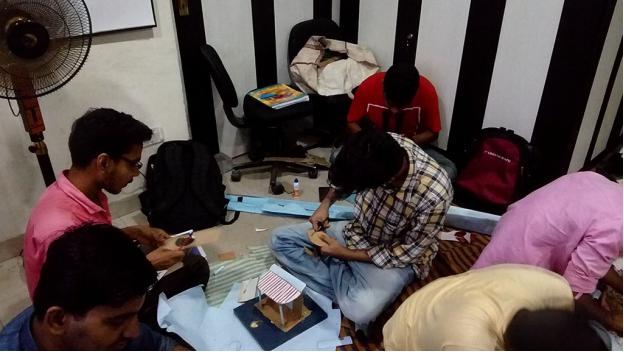
The two day event brought a tremendous response and students taking interest made the administration very happy and proud.
The students were gathered in the venue after lunch and were given the space they required and they shone bright with creativity.
All their eyes and hand busy with the prop in hand. The seriousness and dedication led them to make some of the most stunning and great creations.
We can see an elegant creation of a pillar based chariot, with greenery cast on the two storeys of the chariot.
The marvelous red flag on top looks stunning and the deer horn emblem on the chariot smartly symbolises the loving bond of Lord Krishna with nature as he is seen in many pictures with a deer and a cow. Sweata Roy has done an beautiful job.

Askash Das here has made an towering chariot similar to the ones in Jagannath Dham at Puri.
The pyramidal structure on the straw based support is an excellent combination; with the toothpicked wheels and base covered with numerous thermocol balls Aakash certainly has done a wonderful job.
The patterns in the pyramidal structure equally attractive and it’s one of a kind chariot.

Now we see Diya Das holding her chariot with pride and accomplishment.
The chariot looks gorgeous and is decorated to with a colourful range of structures.
The resting seat in the chariot resembles the throne like structures in kingly palaces, the flowery decor on the our side is much appreciated by the eye of the beholder, the crown looking roof is very similar to the ages of Mahabharata and Ramayan where horse pulled chariots were symbols of royalty.
The wheels were cleverly crafted from thermocol cubes wrapped in with paper ribbons. And the swan figurines personifies our dreamier depths and feelings.
Priyanka Sen has also made a beautiful chariot, with the colour purple used overall signifies the close touch to Lord Krishna’s attire, and the bell hanging from the roof looks pretty neat.
The garland dressing from each corner is soothing to eye and brings a bit of serenity to our soul.


The garland dressing from each corner is soothing to eye and brings a bit of serenity to our soul.

Other participants like Peacock pulled chariot by Sagar Biswas proud student of Maac Kolkata, the jewelled red chariot by Somarita Poddar all the other participants who wholeheartedly joined this crusade to bring back the days of our.


Childhood back they all deserve a sincere thanks.
“Clouds come floating into my life, no longer to carry rain or usher storm, but to add color to my sunset sky” as Rabindranath Tagore said so we wish and monsoon to add colour to everyone’s heart and soul.
Maac Kolkata has been leading students to a better prospect and ushering them with every ounce of knowledge on the diverse field of 2D and 3D based entertainment.
Maac Kolkata bothers to bring back nostalgia and a touch of sensitivity everyone’s life because Maac Kolkata cares, as cultural critic James Wolcott wisely said “Everyone is entitled to his own Nostalgia”.
So are you a creative person by heart and soul then just come quickly and hold our hands at Maac Kolkata. We promise you to give your dream career.


