Thursday, 11 April 2019

Secret Behind The Special Effects of Mission Impossible Fallout

Hello readers today in this blog we will be familiar about the Special Effects applied in the film Mission: Impossible-Fallout.


Produced, directed and written by Christopher McQuarrie, Mission: Impossible-Fallout is the sixth instalment in the Mission: Impossible Film Series.

Tom Cruise is the star cast of this film.

Shooting of this film took place in Paris, United Kingdom, New Zealand, Norway and the United Arab Emirates. .

It received appreciation for screenplay, direction, cinematography, action, stunt and performances.

Critics regarded this film as one of the “greatest action films of all-time”.

This film earned box office success grossing $791 million worldwide.

Double Negative and Blind LTD provided the Visual Effects for the movie.

Thrilling VFX  and Special Effects By DNEG Team


Tom Cruise played the role of Ethan Hunt, an Impossible Mission Force agent and leader of a team of operatives whereas Henry Cavill as August Walker was tasked to monitor Ethan and his team.

The plot of the film follows Ethan Hunt and his team who searched for missing Plutonium while monitored by a Central Intelligence Agency after the mission goes wrong.

Ving Rhames or Luther Stickell acted as Hunt’s team member and his closest friend.

For the Motorcycle chase and prisoner escape, the photogenic streets of Paris fulfilled the purpose, sometimes additional cars were added into the background by Special Effects team.

Cruise used M5 BMW’s cars to travel around and crash into the locations, car crashes in Paris were not CG created, it took place in real life.

The action sequence involves a French Police convey transporting rogue M16 agent Solomon Lane in a prison truck, to make this scene Special Effects Supervisor Neil Corbould built a rig to allow Cruise with his truck to side into the prison truck.


Filming occurred in United Arab Emirates (UAE) where High Altitude Low Opening (HALO) jump scene with Cruise took place.

HALO jump was the most complicated stunt which required Cruise and his crew to train on a ground-based vertical wind tunnel and then they used a C17 military aircraft to make One hundred jumps from around 25,000 feet.

The jump shot was filmed at a time when the sun was just beneath the horizon.


Digital Negative (DNEG) picked the best shot from each of the One hundred takes and weaved them together; cloud simulations and natural elements were added digitally.

Lot of hard work were done to join multiple takes of action together into a long one-shot, handling the tricky cameras, animating digital characters, CG storm for the characters to fall through and recreating wide view of Paris.

The movie was filmed with 35mm anamorphic film cameras but skydive sequence was digitally shot as film cameras are heavy to carry.


During skydive cameraman wore a Red camera on his helmet fitted with small crosshair over his eye so that he could roughly guide the camera.

The Visual effects team faced the biggest challenge when they had to replace the Abu Dhabi desert where the jumping scenes took place with Paris.

Team of artists re-created the Grand Palais des Champs-Elysées using Imagery, Lidar Scans and photogrammetry from drone footage taken from above the building.

DNEG worked on a total of 1,326 shots out of which 1,042 shots were used in the film.

The explosion at the opening of the movie was created in Houdini.

The visual effects were supervised by Huw Evans, Andrew Booth and Jody Johnson with the help of company like The Third Floor.

DNEG used Autodesk Maya for Animation and lighting, Foundry’s Nuke for compositing, SideFX’s Houdini for effects and Isotropix’s Clarisse for rendering.


The Helicopter sequence took place in New Zealand.

The crew member fitted RED Camera to the front of a helicopter to capture plate photography.

New Zealand provided the scenery and facilities needed for the aerial photography.

Cruise flew over glaciers and through canyons; the helicopter crash at the end of the film was shot with special effects rigs.

But a number of shots were shot in a motorised helicopter against a blue screen surround in Leavesden Studios rather than real location of New Zealand.

The Medical camp in the mountains of Kashmir were created with the help of environment artist Poul Steenstrup, they matched practical buildings of the village with other CG created buildings.


The Helicopter chase sequence was shot in location like New Zealand around Rees Valley, Shotover River, Liawrenny Peaks and Milford Sounds Area.

The climax helicopter shot was digitally recorded for 40 minutes at a time and the quality of digital footage is fantastic.

The fist-fight on the mountain side was filmed in Norway on Pulpit rock, a small plateau with a razor sharp cliff.

The crash scene where Hunt’s Helicopter crashed Walker’s helicopter was a mixture of full CG environment and set built at Leavesden Studios.

The environment Supervisor created 360 degree dome by mixing photography and matte painting to have full control over the camera and its rotations.


The dangerous stunt was where Tom Cruise climbing a rope dangling from a helicopter at 2,000 feet, free falling 40 feet and bouncing off of the payload being transported.

This Long-Line stunt was based on rigging and wiring teams.


Actor Cruise even injured himself while shooting the rooftop chase scene in London and shooting was halted for nine weeks but Cruise joined back at seven weeks.

The Musical score of this film was composed by Lorne Balfe and the score was praised by many critics.

Film Editor Eddie Hamilton used latest version of Avid Media Composer for editing.

Every sound, piece of dialogue, editing, musical note and visual effects were carefully constructed in this film.

With the involvement of lot of talented people, the film was made successfully.

MAAC Kolkata institute is the global leader of Animation and VFX.

All the three MAAC Kolkata Centres i.e MAAC Chowringhee, MAAC Rashbehari and MAAC Ultadanga provides Courses on Animation and VFX.

So aspirant what are you waiting for?

Join us and be a part of our promising career.

Tuesday, 9 April 2019

How VFX Revolutionized Story Telling Trend


VFX are the crucial part behind the film industry now.


About 90% of the films releasing today has Visual Effects sequence in some portion of its running time or the entire movie could have VFX Scenes.

Today in this blog our discussion will be on how VFX or Visual Effects transformed the story telling style in the film industry.

With the advent of digital computer graphics VFX artists have got full control over their images.

Digital VFX have extended the scope of narrative expressions, it has changed the way a scene appears or it could make something look more realistic by adding depth.

As we all know that Visual Effects are form by combination of both live-action footage and Generated Imagery, visual effects work is generally completed during post-production stage.

With the help of multiple tools and technologies like graphic design, modelling and animation VFX are achieved where as Special Effects are done at the set of filmmaking.


Cinema is a medium of telling stories; from the early history of cinema storytelling is mostly done through actor performances combined with set design, meaningful cinematography and aesthetic visual and sound editing.

The goal of making a film is to make the audience believable and creating a sense of realism in the pictures and sounds.

The main purpose of using Visual Effects is to capture such Imagery which is impossible to create due to practical difficulties of the film camera or due to financial difficulties.

In the early years before the coming of digital technologies, visual effects consisted of capturing imagery using trick photography .

With the help of exposure technique using lenses, shutter speed, perspectives, filters and masks.


Film like King Kong (1933) used models, perspectives and double role were shot used partial exposure of the celluloid film.

From the early 70s digitalization began with the advent of imaging sensor and computers and thus emerged the era of Computer Generated Imagery or CGI.

Computer Software and digital technology helped to create the imagery which is otherwise difficult to create through film camera.


Early CGI films provided revolutionary pictures in the form of series of movies such as Star Wars, The Terminator, Guardians of The Galaxy and others.

VFX has proved to be blessings to filmmakers who can now create anything out of their imagination and place it on the screen.


Films like Godzilla and Planet of The Apes used enormous capabilities of the digital technology to create the terrifying creatures and monsters.

That came alive on the big screen with realistic sound effects and background music.

Jurassic Park series helped to bring back long-lost era of Dinosaurs and Hollow Man gave an experience of complete and believable invisibility of a human.

VFX are completely helpful in making sequels mainly for action films, as directors and actors can already plan for the sequels in the production stage.

The producers can publicize the sequels that ensure bigger and better effects.

Excessive use of VFX can divert audience attention more toward visual extravagant rather than on storyline.

Filmmakers have to keep in mind that applying a lot of Visual Effects into a movie does not make a movie good.

Crafting a good story is more important than working on the VFX.


Recently there are many numbers of VFX Studios who are doing incredible jobs, the most renowned among them are Digital Domain, Weta Digital, Induatrial Light and Magic, Framestore, DreamWorks Animation and others.

Amazing Visual Effects can be achieved through different techniques like-

Animation technology shows 2D or 3D artwork, it can be completely Computer generated or hand-drawn method.

Modelling technique creates 3D models of props or characters using specialized software.


Chroma Key is a technique of compositing two images or frames together in which a colour range from the above image is removed or made transparent revealing the image behind.

Compositing is the method of combining visual elements from various sources to one image so as to create an illusion that all images are the part of the same scene.

Various compositing for Live-action could be Chroma Keying, Green Screen, Blue Screen etc.

Matt Painting is the technique of representing landscape, distant location that allows filmmakers to create an illusion which could be rather much expensive or impossible to shoot on a live action film.

Motion Capture or Mo Cap is the process of recording the movements of objects and people with the help of scanners placed all over their body; this method is widely used in filmmaking process now days.

Each and every new innovation lasts for a specific period of time and then it need to develop further as the demand for greater heights suppress the earlier work.

VFX enhances storytelling process.

A good cinematic storytelling involves good content going hand-in-hand with great visuals because at the end content is the King.

Visual Effects Industry has contributed a lot in the bringing of the Superhero characters from the comic books to the film screen.

Even Science-fiction films are too creating the unbelievable imagery by utilising high end technologies and effects.

Films like Gravity, Terminator2: Judgement Day, Pacific Rim, Avatar, Dawn of the Planet of the Apes has shown the huge possibilities of Visual Effects in the field of filmmaking process.

VFX Revolutionized Story Telling Trend

Directed by Matt Reeves War for the Planet of the Apes (2017) is the sequel of Rise of the Planet of the Apes (2011) and Dawn of the Planet of the Apes (2014).

Matt Reeves worked with Weta Digital VFX Studio for all these three movies.

The Apes were created with the combination of Motion-Capture and CGI Key-Frame Animation.


James Cameron’s movie Avatar made in 2009 was nominated for nine Academy Awards and won three awards for Best Art Direction, Best Cinematography and Best Visual Effects.


The Jungle Book is another popular film which won Academy Awards for Visual Effects.

Hence we had a view that how from early years visual effects were part of the movies and with the advent of technologies more and more films are being loaded with VFX.

Be a part of our Maac Centre and dare to create unbelievable Visual Effects which will blow the mind of the audience.

Sunday, 7 April 2019

Google Declares Motu Patlu The Most Popular Indian TV Show

Due to the immense popularity from the past few years, Google has declared Motu Patlu as the most popular TV show in the world.

In today’s blog we will talk about rib-tickling comedy show Motu Patlu.

As the name suggests Motu Patlu is a story about a two friend; one is fat and other one is thin, they are the main protagonists in the show.

Produced by Cosmos Entertainment and Maya Digital Studios, hilarious story of Motu-Patlu is an adaptation from the Classic Comic Strip on Lot Pot.

It is an animated sitcom television series aired on Nickelodeon.

Google Trend placed Motu-Patlu at No. 4 in the rating list as the most popular TV show in the World.

Motu-Patlu is the only Kids’ Animation show to be featured in the top 10 search trends.

This happened as the show received top ratings in India, Motu-Patlu remained at the top of the ranking every week of 2018.

Beating other American shows like ‘Lost in Space’ and ‘The Haunting of Hill House’ from the Netflix portfolio, Motu Patlu emerged as most searched Indian TV show in the world.

Peeping Into The Space of Motu-Patlu.

Motu-Patlu was premiered on October 2012, starting from the episode ‘John Banega Don’.

Suhas Kadav is the director of the show and Sandesh Shandilya is the composer of theme music.

It is written by Niraj Vikram whereas Deepa Sahi and Anish J S Mehta are the producers.

Motu Aur Patlu Ki Jodi, the theme song is sung by Bollywood singer Sukhwinder Singh.

Motu Aur Patlu Ki Jodi is very catchy and hilarious song and adds up more rhythms to the story plots.


Motu-Patlu cartoon series is about Motu and Patlu two friends living in Furfuri Nagar.

The story shows how they fall into the comical situations and then rescue themselves only by absolute luck.

Its an amazing 3d animation series loved by people of all age groups.

Motu craves for Samosas all the time as Samosas are favourite food of Motu and he frequently tries to steal them from the local Chaiwala who makes the best Samosas in the Furfuri Nagar.

Samosas provides Motu power and his brain starts to work again as Motu says in the plot that ‘Khali Pet Mera Dimag Kaam Nahi Karta’.

Motu lands up into trouble whenever he looks for easiest way to earn money, have fun or eat lot of Samosas.


Motu’s dress code is Red Tunic with Yellow Pyjama and sleeveless black jacket.

He has a pot belly and little hair above his head.


Motu’s best friend is Patlu, he often gets into trouble because of Motu’s action.

It is the Patlu who solves the problem and brings Motu to the safe zone.

Patlu is a slim and smart man in the Furfuri Nagar, his brain works very fast.

He gives advice to Motu to be at normal track and lead danger-free life but something or other always happens to them.

He does not like samosas but loves to read newspaper.

Patlu wears Yellow tunic with Orange Pyjama, brown framed glasses and brown shoes.


‘John the Don’ is the main antagonist in this serial, who is accompanied by his two dull-witted henchmen.

John wants to be Don but his plan fails due to the heroic actions of Motu-Patlu.

The high-quality 3D animation has always been a part of Nickelodeon’s effort in offering different Indian content to kids.

The animation of Motu-Patlu is done by Maya Digital Studios brilliantly and it did justice to the Lot-Pot comic series.

Maya Digital Studios have developed the technology of animation and visual effects in India and constantly offering International quality 3D animation for best International Studios.

Motu-Patlu gathered more than 3 billion views on WowKids, Cosmos-Maya’s You Tube Channel despite of Motu Patlu is geo-blocked on YouTube in India.

In this show National Integration has been portrayed through the characters from different states of the Country which make the show more lively and interesting.

The other characters like Ghasitaram, Chingam and Dr. Jhatka are there to help Motu and Patlu.


Dr. Jhatka is from Punjab and his accent is like a sardar; he is a scientist and keeps himself busy in his inventions, his gadgets are of no use to the humans.

Ghasitaram is from West Midnapore in West Bengal, his 20 years of experience is of no use to anyone.

Inspector Chingum is a police Inspector from South, he has South Indian accent and he is a Rajnikanth’s devotee.


Chaiwala is a man who lives near Motu’s house and makes Motu’s favourite samosas and Patlu’s favourite tea.

The dialogues delivered by different characters with the authentic accents are very impressive.

The background score and the theme song is very mush rural in nature and gives a very ‘Desi’ feel to the show.

Music composer Sandesh Shandilya and singer Sukhwinder Singh has done justice to this comedy show.

Fictional town Furfuri Nagar is a peaceful and colourful Indian small town surrounded by a river, few shops, large market area, bus depot, airport, a cluster of single-storey houses and temples.


The police force of Furfuri Nagar wears uniforms of Maharashtra Police.

The length of single episode is about 30 minutes each.

The genre is slapstick humour and a fun show for kids as well as adults.


A movie called Motu Patlu-King of Kings has also been released in the year 2016, produced by Ketan Mehta.

According to Anish Mehta CEO Cosmos-Maya, “Motu-Patlu is our biggest property.

Our IP creation journey began with Motu-Patlu and to see it continuing its golden run is a great feeling. 2019 will be even bigger.”

Motu Patlu is definitely an entertainer for kids with all the properties of slapstick humour; the overall presentation is eye-catching and impressive.

Compared to other Indian Television animated cartoon shows, Motu Patlu is more popular due to its high quality International standard 3D animation, hilarious content, bright and colourful presentation, melodious music and Desi style.

Animation in India has improved to the International level therefore our animated programmes are capable of fetching appreciation from not only India but aboard also.

So, what are you waiting for be a part of our Maac Kolkata and take your imagination to the International platform.

Thursday, 4 April 2019

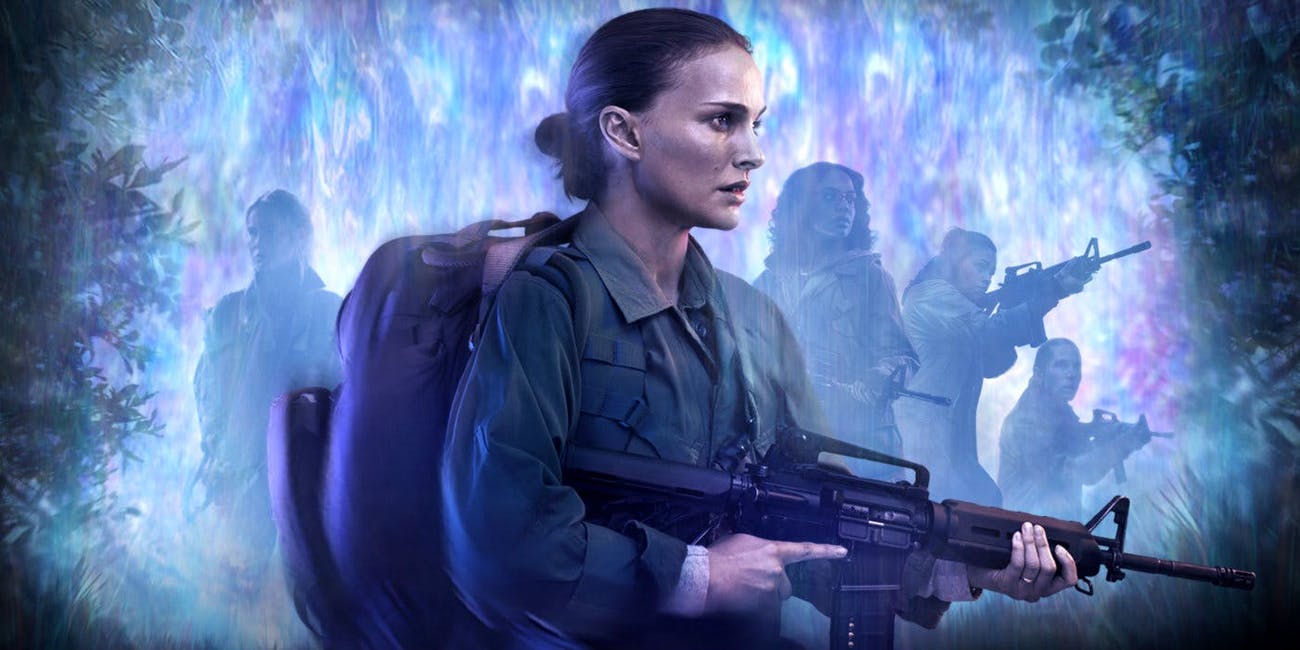
Stunning VFX Of The Movie Annihilation

In today’s blog we will look at how the special effects created the visuals of complete destructions in the 2018 movie Annihilation.

Annihilation is written and directed by Alex Garland.

It is based on novel by Jeff VanderMeer and casted actress Natalie Portman as protagonist along with others.

It received appreciation for its visuals, acting, direction and thought-provoking story.

According to the Empire British film magazine ‘the film focuses on the issue of depression, grief and the human tendency for self-destruction’.

Annihilation was released theatrically in Canada and United States and released digitally by Netflix in many Countries.

Contribution Of VFX Studio DNEG and Others

Let’s have a look at how VFX Studios like Double Negative, Nvizible and Milk VFX created incredible visuals.


The plotline follows a biologist and a former soldier Lena (Natalie Portman) who is recruited by the government to investigate peculiar happenings occurring at national park and tropical coastline in U.S.

Lena sets for the operation along with psychologist Dr. Ventress, physicist Josie, scientist Cass and paramedic Anya to find out what happened to her husband (Oscar Isaac) inside The Shimmer.

Lena’s team enters the coloured glycerine bubble liquid like curtain armed with weapons, here the vegetation is rich, birds are too brightly coloured and numerous.

Inside Shimmer the team of women discover a world of mutated landscapes and creatures, which is beautiful as well as dangerous.


Lena comes across a bout house surrounded by beautiful and unique flowers, the set was decorated with real white orchids and Veronicas to make the actors feel natural with the scene, later on rigged mutated flowers different in shape with cloth simulations were added in the scene.

Mutated flowers were built using 3D software Maya, given texture in Mari and arranged in Nuke before being placed into location using CG.

Photoshop tools were used to paint wide and close up shots and to create concept idea.

The suburban mid-west house inside the shimmer was created with CG.

A fully CG house with fence, lawn, swings, phone lines, satellite dishes and, flower beds was created inside the shimmer, the cityscape background was created with an additional matte painting.

For the camera movement a 2.5 version of the entire environment was also made.


For the bear visual effects supervisor Andrew Whitehurst and his team worked on several concepts such as a wild boar like creature, a bear with a set of human teeth and finally a design was selected where several species skulls were mashed together in 3D software.

The 3D design for the bear was created by rigged with muscle systems and skin simulation to get the folds in the flesh correct, similarly the fur was groomed to be matted and patchy to highlight the diseased state of the beast.

The bear was created by mixing practical effects and CGI with addition of human voice at post-production stage by sound design team.

Team of five women scientist confronted a huge mutant crocodile, a bear with predator teeth and dead humans morphed into botanical hybrids in the Area X.

At DNEG studio 250 artists worked around 800 shots for the film.

The director and his team took five days to film the bear attack sequence.


The Tristan Versluis special make-up and animatronics team designed and built a full scale model of alligator which was scanned and used as the basis for digital version, the team could adjust the level of horror or mutation of the creature digitally.

VFX artists observed a lot of electron microscopic image of cells, mathematical forms, lichens and deep sea images and developed visual ideas through concept paintings, story boards and animation tests.


The source of Shimmer was achieved by creating a modified Mandelbuld 3D fractal that developed by Federico Frasinelli, which was later rendered with a lava and metal like surface.

Extensive Compositing work was done on them to make the effect fine; Mandelbulb is a mixture of geometry, shading and compositing work.

Mandelbulb was created in Houdini, 3D software.


DNEG handled the major part of the visual effects but along with it studios like Nvizible, Milk and Union also contributed in the making of Annihilation.

Nvizible worked on the scene where Radek transforms into a tree like structure.

Milk did set enhancements and created elvers that we see in a single shot of under the water surface.

Union also did environmental work and created exterior shot of Lena’s house.


Stephanie Whitmarsh simulated CG trees; the timing of the falling tree was matched with the speed of the editing.

Cleve Zhu helped in compositing the trees, he helped to tie the CG trees with the on-set phosphor flare lighting that was created by Hayley Williams’ SFX crew.


Actress Sonoya Mizuno was the humanoid in the film and Kristen McGarrity played doubled for Lena.

Motion Capture technique was used to get the action of humanoid.

Sonoya wore a black skin-tight costume with tracking markers and performed all her scenes up to the moment of fire on her body, CG fire on CG humanoid was done.


The fire on the Humanoid and the lighthouse was done by Federico Frassinelli and his FX team.

With the cinematographer Rob Hardy the film was shot for several weeks on different locations of UK, the fishing hut is in Windsor Great Park, the lighthouse at the Holkham in North Norfolk, base is actual former US Air Force base.

The credit goes to art department as it turns rural England into marshy outlet of a lake or river.

Alex Garland’s Sci-fi Annihilation will take you into the weird world of shimmer, an environment that is fast absorbing nature and destroying it.

Garland used The Shimmer to explore the human urge toward self-destruction.

Annihilation is a visually rich film where huge amount of design work has been done.

A tale of horror and suspense, Annihilation left a haunting impression on its audience.

If you carry that passion to be a part of splendid Visual Effects for the Movies then come and visit any of our Maac Kolkata Centre and explore numerous VFX techniques that are used to develop remarkable VFX in the Movies.

Tuesday, 26 March 2019

Most Talented Disney Animator Don Lusk

Animator and director Donald Lusk was the last vital link to Disney’s ‘Golden Age’ of Animation.

In today’s blog we are going to discuss about great Disney Animator Don Lusk who died on December 2018.


Disney Animation Research Library confirmed that Lusk was considered the last surviving artist from the early days of Disney Animation.

Born on October 1913 in United States, he served in the United States Marines during World War II.

At the age of 20 in the year 1933 Lusk was hired by The Walt Disney Company as an In-betweener.

Don Lusk contributed on many Disney animated films that are now considered classics such as Snow White, Bambi, Pinocchio and Seven Dwarfs.


Donald or Don Lusk career spanned more than sixty years starting from 1933 hired by Disney.

After joining Disney at the age of 20 he worked on Mickey Mouse shorts for several years, as he used to work on detailing of Goofy’s character.

He was responsible for filing in the gaps as an in-betweener in animation drawings left by other animators.

After few years he was promoted to animator and contributed in contributed in Disney’s first feature film Snow White and the Seven Dwarfs made in 1937.

He also contributed in1938’s Ferdinand the Bull adapted from The story of Ferdinand (1936) by author Munro Leaf.

Don Lusk worked on numerous Disney classics as an Animator including Pinocchio, Fantasia, Bambi, Song of the South, Cinderella, Alice in Wonderland, Sleeping Beauty and the list goes on.

At Disney he spent more than two decades and during this period worked on most of the Disney features from Snow White to 101 Dalmatians along with many shorts.

Don Lusk worked on 13 out of the 17 Disney animated features that were released between 1937 and 1961.


For the film Pinocchio, Don Lusk worked on 2danimation for Geppetto’s pet goldfish, Cleo.

Pinocchio is a 1940 animated fantasy film produced by Walt Disney Productions.


In the 1940 film Fantasia, Lusk single handed animated the danse arabe portion of Fantasia’s Nutcracker sequence.

In which a collection of fish performs a hypnotic and kaleidoscopic underwater dance.

Sketching of the fish doing her dance was quite a laborious work.

More than 1,000 artists and technicians were used in the making of Fantasia, which showed more than 500 animated characters.

His creation on movie Fantasia is now acclaimed as one of the great early works of animation.

In 2013 interview Lusk revealed that the final work was completed too hurriedly and he was very dissatisfied with the finished version.

He contributed in the Disney studio’s innovation during its Golden Age of Animation, as Disney developed techniques for mixing picture and sound, animating the backgrounds and achieving bright special effects.

Talented Lusk worked on the classic ‘Nutcracker Suite’ and ‘Pastoral Symphony’ segments of the film Fantasia.


For this ‘Nutcracker Suite’ studio filmed professional dancers Joyce Coles and Marjorie Belcher wearing ballet skirts that resembled shapes of blossoms.

Lusk took part in 1941 Disney animators strike and took a break from his career and joined military service with the U.S Marines.

Later he returned in late 1940s to work on films like Bambi, Song of the South and The Adventures of Ichabod and Mr. Toad etc.


Bambi released in 1942 during World War II and was Disney’s 5th full-length animated film.

As Disney wanted the animals in Bambi to be more realistic and expressive than those in Snow White, a painter of animals named Rico LeBrun was invited to teach animators on the structure and movements of animals.

Lusk was allocated to the training film unit in Quantico, Virginia, where he spent few years working with other enlisted animation artists such as Carl Fallberg, Tom Codrick and Pete Alvarado.


After the World War end, Lusk returned to Disney to work on Alice in Wonderland where Alice falls down in the rabbit hole;.

Flora and Merry weather throwing pink and blue pixie dust in the film Sleeping Beauty and the nanny in movie 101 Dalmatians running out into the streets and yelling for help after the puppies are stolen.

Don Lusk left Disney in 1960 to direct multiple cartoon films and series.

During 1960s he worked on Peanuts TV specials, many of the Charlie Brown TV programs such as What a Nightmare, Charlie Brown! And you’re a good sport, Charlie Brown.

He also directed several television shows like The Smurfs, Yo Yogi, The Addams Family and 80s cartoon series of Paddington Bear.

Lusk freelanced for studios like Bill Melendez and Walter Lantz before moving to Hanna-Barbera in the 1970s.

At Hanna-Barbera production he worked on episodes of Scooby-Doo, The Flintstones, The Jetsons and Tom and Jerry.

Don Lusk Animator Discussion At animation Kolkata

He continued his work in animation in 1990s and contributed in series of The Jetsons revival, Adventures of the Gummi Bears and multiple episodes of Captain Planet and the Planeteers.

Don Lusk took final retirement at the age of 80 in 1995 after his work on the children’s TV show The Pirates of Dark Water.

He was nominated twice for the Emmy award for his work on The Smurfs in 1988 and 1989 and for Pup in Scooby-Doo in the year 1999.

He received the Winsor McCay Award in 2014 for lifetime achievement at the Annie Awards.

Among the Nine Old Men of Disney Animators; Don Lusk is one who supported elite animators but never received the same kind of recognition.

Don Lusk wasn’t simply an artist in the animation industry but a true pioneer of the art form.

He helped to develop the art form of animation that inspired artists who followed his footsteps.

Hence we noticed in this blog that contribution of an In-betweener plays an important role in the animation industry and only a talented, skilled and innovative person can become In-betweener in the animation field.

Join Us to know about animation Industry, and become an animator.

Sunday, 24 March 2019

Magical VFX World Of Mary Poppins Returns

Who can forget the marvellous performance of Julie Andrews in the film Mary Poppins made in 1964.

But today we will look upon the recent musical fantasy film Mary Poppins Returns released in 2018.

Mary Poppins Returns stars Emily Blunt as protagonist.

The plot is set in 1930s London, twenty five years after the events of the original film; it follows Mary Poppins the former nanny of Jane and Michael Banks returning after a family tragedy.

Directed by Robert Marshall and distributed by Walt Disney Studios Motion Pictures this film has grossed over $318 million worldwide.

Mary Poppins Returns is a beautiful blend of musical and fantasy with dash of vfx.


Visual Effects for the movie is provided by Cinesite, Framestore, Luma Pictures and TPO VFX.

The VFX team created a combination of many styles of beautiful effects that looked fresh to contemporary audiences.

Similar to the original film, this film includes a sequence combining live-action and traditional hand-drawn animation.

Hand-drawn animation was created by Duncan’s animation studio, Duncan Studio, in Pasadena, California.

The overall supervision was handled by ex-Pixar veteran, Jim Capobianco and ex-Disney animator, Ken Duncan, supervised physical animation production at his studio in Pasadena.

VFX companies like Framestore, Cinesite and Luma Pictures worked on everything from digitally erasing any modern structures visible in the background of the London exterior shots to digitally creating period London landscapes and extending Cherry Tree Lane.


In the Royal Doulton bowl scene when all the characters interact with the animals, a 20 feet giraffe was used during filming to give children a point of reference.

Animated background environments were inserted later in post-production.


In the magical world where Blunt and co-star Lin-Manuel Miranda performs song and dance; traditional style of hand-drawn animation with fully digital environment was used.

More than 70 animation artists specializing in hand-drawn 2D animation from Walt Disney Animation Studios, Pixar Animation Studios, and other animation studios were engaged for the sequence.

Artists created the music hall as a Computer generated environment and texture it with authentic hand-painted artwork to make it feel Disney cartoon word and it took 16 months to complete all the animation.


Framestore is the lead VFX Company on the film with visual effects, animation and musical numbers.

The animated drawings were created using pencil and paper; then scanned onto the computer to be digitally inked and painted.

Designer James Woods and animator James Baxter also helped to re-design the penguins from the first film.

Advancement in technology allowed the filmmakers a chance to blend 2D animation with 3D modern tools and allowed the camera to move all throughout the hand-drawn and digital CG environments


Marshall’s steady-cam worked with fluid cinematography helped to render the flatness of the Royal Doulton’s cartoon bits within their three dimensions.

They created a living style that harmonizes the live-action performance, the cartoon penguins and the computer-animated stuff.

Carriage ride environment was made up from traditionally painted artwork; projected in 3D space.


In the bathroom scene Mary Poppins pulls impossibly large objects from her carpet bag and to give total freedom of movement to Emily and camera artists created a digital bathroom.

A specially constructed SFX rig helped Mary and children slide into the tub and taken beneath the Magical Ocean.

Children in the film were shot in SFX bubble rigs that allowed them to twist and tumble safely as the bubbles breaks; they find themselves on an ocean covered in huge mountains of bath foam.

According to the CGI artist each of the bubble spheres needed to be accurately reflect and refract its environment; the combination of the motion of the ocean surface and the particle effect foam break up made this effect hugely challenging.


The biggest challenge of Framestore’s London team was creating a unique dry look for the undersea adventure by shooting on chroma screen and then finding a balance between photorealistic environments.

The CG artists created simulated water, foam and bubbles all with individual movement.

The fantastic underwater world was fully 3D environment and animals were created from scratch.


The VFX team re-created 1934 London and extended the Cherry Lane Studio Set.

Film’s Cherry Tree Lane was re-imagined as a more humble place.

As there was a lot of expectation from the team of Mary Poppins Returns to not just pay homage to the original movie but to make it fresh, new and contemporary, Visual effects supervisor Matt Johnson used up-to-date technologies.

In the year 1964 Special effects god father Peter Ellenshaw used the most up-to-date technology to create the animated world in the old Mary Poppins film.

A fully digital house of Parliament and the surrounding was created along with Big Ben Clock.

At Shepperton Studios, eight soundstages were used to build and house the astounding practical sets for Cherry Tree Lane, Big Ben, enormous abandoned park and interiors of Banks home.


All effects were not computer generated, Poppins talking umbrella is a practical effect controlled remotely.

The parrot on the end of Emily’s umbrella was built as an animatronic, so it could be practical prop on set.


In the Spring Fair Scene where the cast floats into the sky with magic balloons.

On location and on soundstages with the actors wearing harnesses that could be hoisted upwards with huge cranes set against backdrops of actual period locations and blue screens.


The lampposts in the film were specially designed to facilitate a complicated dance number featuring Lin-Manuel Miranda and the crew.

The director chose to shoot on locations throughout London to give the film a more grounded sense of realism, so that the wonder that comes when Mary Poppins arrives are the perfect departure from the real-world issues.

Set included St. Paul’s Cathedral, Buckingham Palace, King Charles Street, Tower of London and others and required detailed set dressing to obscure any modern touch.

Mary Poppins Returns film is an expertly crafted and hugely entertaining film.

It has received numerous award nominations in various categories.

Like Mary Poppins Returns if you want to be part of magical world of vfx then secure your future in just a click away.

Thursday, 21 March 2019

Animated Movies On Mythological Character Hanuman

In today’s blog we will consider animated movies on Mythological hero Hanuman.

Lord Hanuman is one of the central characters in the ancient epic Ramayana.


Hanuman is the son of wind-god Vayu and an ardent devotee of Lord Rama.

Apart from being a popular deity in Hinduism, Hanuman is also found in Jainism and Buddhism.

Hanuman is a legendary character in legends and arts found outside the Indian subcontinent such as Myanmar, Thailand, Cambodia, Malaysia and Indonesia.

Hanuman is a brave, heroic mythological character.

Let us look at the animated movies that are made on Hanuman till date.

Computer Generated Movies on Hanuman


Released in 2005 Hanuman is the first animated feature film directed by Kshitij Singh and produced by Percept Pictures and Silvertoons.

The animation of this film was created by Kakarakaya Pulsu, 2D animation was used in this film.

Hindi dialogue of the film is written by Milind Ukey, Sulekha Bajpai and Shanthanu Rode where as English dialogues are written by Rajiv Gopalakrishnan and Neerav Ghosh.

Actor Chiranjeevi gave voice for the Telugu version.

This movie depicted Hanuman’s life from birth and the narrator was actor Mukesh Khanna.

The story plot showed that Hanuman is naughty and used his powers to trouble the saints living in the nearby forest and when hungry he leapt to catch the sun thinking it was a fruit.

Lord Hanuman is the 11th Rudra avatar of Shiva and possessed supreme intelligence, and strength.

Blessed with divine powers Hanuman could overcome death and could transform his body to take the smallest form or attain the biggest form of life.

Once grown up Hanuman was reminded of his original purpose that is unconditional devotion to Lord Ram.

Hanuman helped Lord Ram and Laxman in their search for Sita.

With his super powers Hanuman burned the golden city Lanka and helped Lord Ram and Laxman to defeat Ravana.

Pleased with his devotion and love Lord Ram blessed Hanuman with the immortality.

The music of this film is composed by Tapas Relia and the film is edited by Huzefa Lokhandwala.

Sahara One Motion Pictures is the distributor of this film.

This film is India’s first major commercial family animated feature which collected Rs. 8.18 crores and was announced a Hit at the box office.


The next film after Hanuman is the Return of Hanuman released in December 2007.

Directed by Anurag Kashyap, it is the second project of Percept Picture Company.

The screenplay is written by Amit Babbar and Anurag Kashyap and starred Pinky Rajput.

The music of this film was composed by Tapas Relia.

Return of Hanuman is a children’s film and has been rated as an Educational Film by the Central Board of Film Certification (CBFC) as it deals with the issue of global warming.

Like the previous one this movie is also about Lord Hanuman.

The plot of this film follows Hanuman who comes to Earth with a desire to play with village children.

Hanuman reincarnated as Maruti lands up at the village of Bajrangpur and saves a boy from being bullied by local hooligans.

Maruti uses a mace locket to return into Hanuman.

The story starts on how Rahu and Ketu came into existence followed by why man himself is the biggest evil or the impact of pollution leading to global warming.

Return of Hanuman combined the modern with the mythological to communicate the golden lesson of good prevails over evil.

A monster made of polythene and other non-biodegradable waste appears from a volcano and keeps on swallowing the villagers of Bajrangpur.

After struggling to stop the monster, Hanuman asked help from Lord Ram and defeats the monster.

At the end Hanuman leaves his family and friends of Bajrangpur.


Hanuman : Da’ Damdaar is directed by Ruchi Narain and released in 2017.

Produced by R.A.T Films, the storyline follows Hanuman.

Celebrity actors like Salman Khan, Raveena Tandon and Javed Akhtar gave the voice for this film.

It has colourful illustration of characters and backgrounds.

In this film Maruti prays to God to make him the bravest kid in the world.

God heads his prayer and leads Maruti into a series of jungle adventures.

Maruti’s experience and new friends leads him to metamorphose from a simple Bajrangi to Hunuman Da Damdaar.

Music of this film was composed by Sneha Khanwalkar and lyrics are by Abhishek Dubey.

The background music was given by Shruti Kumar-Jessica Weiss and Bupi- Tutul.

The album is released by T-Series.


Movie Hanuman Vs Mahiravana is released in 2018.

It is an Indian Mythological adventure 2D and 3D stereoscopic animated movie produced by Green Gold Animation Pvt. Ltd and distributed by Yash Raj Films.

The story is written by Narayanan Vaidyanathan and directed by Dr. Ezhil Vendan.

The film is about Hanuman and his attempts to free Lord Rama and Lakshmana from the clutches of evil wizard Mahiravana.

Mahiravana is the son of sage Vishrava and the brother of Ravana, the king of Lanka.

It mainly focuses on the tale of Hanuman and his biggest battle with Ravana’s youngest step-brother, the king of Patala Mahiravana.

The expert voice over helped to bring the characters to life.

The 3D animation and effects is of good standard each frame is intricate and beautifully designed.

The music and background score raises the viewing experience.

This Movie released across India in Hindi and Tamil on July 2018.

It was distributed by Yash Raj Films and running time is 1 hour 36 minutes.

With stunning visuals this film is a good entertaining piece for all age group.

In India Mythological heroes like Hanuman, Ganesha and Krishna helped to start the animation industry.

Mythology delivers ready-made storyline, well-defined and easy-to-recall characters that quickly click with the core audience.

Experiment with more themes needed to be done unlike West our animation films are not made of big budgets.

Hence we got a view of the animated movies on Hanuman that is made till date.

Whether it is superhero or mythological hero animation has aided to bring life in all imaginative characters.

Join our MAAC centre and add colour, texture and movement to any of the mythological heroes.