Showing posts with label animation. Show all posts

Sunday, 1 September 2019

The Lion King: A Game Changer In Photo-Real Animation

Through this blog today we will let you know how the recent movie The Lion Kingbecame a game changer in photo-real animation.
Directed by Jon Favreau and produced under the banner of Walt Disney Pictures this film is a photorealistic computer-animated remake of Disney’s 1994 traditionally animated film.
It is one of the most expensive films made with a budget of around $260 million.
Critics praised this movie for its visual effects, music and vocal performances.
Some of the well known stars delivered voices for this movie such as Donald Glover, Seth Rogen, James Earl Jones and others.

Innovative Photo-Realism Animation
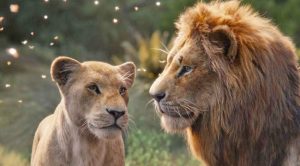
The Lion King Photo Real Animation
From roaming giraffes to the grazing rhinos all looked lifelike in this path-breaking movie.
This movie stunned the audience worldwide by making use of photorealistic computer generated animation.
Lush green backdrops, flowing streams, waterfalls, swaying trees every image looked like scenes from natural documentary.
The Lion King is a game changer movie where Moving Picture Company or MPC provided the visual effects under the supervision of Robert Legato, Elliot Newman and Adam Valdez.
Disney described it as “technologically groundbreaking” approach and not as live-action.
In photo-realism artist reproduces the image as realistic as possible through various digital devices like 3D Scanning, multiple camera capture etc.
Tremendous amount of research and recording of still photography occurred under the guidance of cinematographer Caleb Deschanel to reproduce the reality on the screen.
Director Favreau wanted to make this film in documentary style so creative team visited forest of Kenya to observe and record images of forest land, jungle animals so that they can represent it accurately in digital platform.
Places like Yellowstone National Park and Mono Lake served as inspiration for the Elephant Graveyard and Serengeti National Park inspired the Pride Lands.
Jon Favreau avoided conventional Motion-Capture technique in this movie and relied completely on photorealistic CGI shots.
MPC added new level of details in digital characters look, animation and how the skin and the fur behave.
The Lion King utilized Virtual-Reality technology where cameras were placed in virtual space to emulate live –action production.
Dozens and dozens of African landscape were designed digitally with immense effort so that audience can appreciate the beauty of the place.
To recreate the real world every aspects of lighting, shading, depth of field were taken into account.
Digital Compositing played a big role in this movie as the key focus was on creating reality.

Shooting In Virtual Environment
The Lion King Photo Real Animation
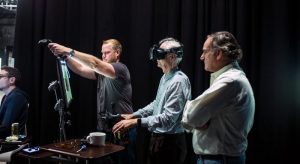
The Lion King was shot in virtual reality simulated environment.
Every environment was digitally made and every character was key-frame animated.
VR system enabled cinematographer to create the scene he wanted and then shoot it in real world; VR headset transported cinematographer to virtual set.
At MPC new software were developed for this movie to create scenes with a shaky-cam look of a handheld camera.
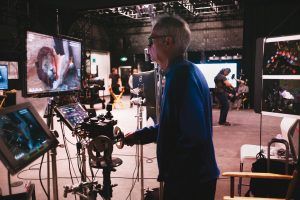
The Lion King Photo Real Animation
Cinematographer Caleb Deschanel actually could change the landscapes, virtual lightsdolly track, camera lenses in huge virtual environment using software option.
Rob Legato VFX supervisor took the virtual production of this film to the next level as he said “Favreau turned ‘The Lion King’ into narrative documentary about animals and nature trying to co-exist in The Circle of Life.
Virtual production reduced time, budgets and physical challenges of shooting on location.
For this film artists worked across studios in Los Angeles, London and Bangalore to deliver magnificent CGI shots.

Photo-Real Characters
The Lion King Photo Real Animation
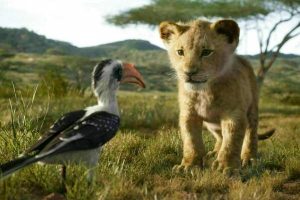
Supervisor Adam Valdez at MPC said that they shot 12,000 photographs and whittled it down to 1600 shots of movie.
Through the art of photorealism the team combined the best of live-action into the animation.
Enormous planning and care went into creating the natural world of Kenya into virtual digital screen.
Making realistic animals was the most challenging aspects for animators at MPC.
Animators used artificial intelligence to make virtual characters act in ways that mimicked real animals.
Around 86 various different animal species were brought to life for the film.

MUFASA
The Lion King Photo Real Animation
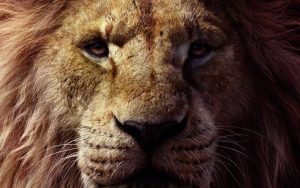
MPC made remarkable effort in producing new software for more complex fur shading, rendering and skin simulation.
New software provided so realistic looking Mufasa that you can see minute detail of the skin.
At MPC animators designed each character by paying close attention to anatomy, fur or feathers, texture, shading of eyes and movements were made authentic according to real life.
Animation Supervisor Andy Jones animated the body muscles according to the body weight.
Animators worked together to make the 3D sculpting of animals as real as captured photographs of animals in Africa.
Each photorealistic character took about nine months to fully develop and was built by mix of real-life references and characters from original movie.
Disney successfully blended together live-action with virtual reality, CG animation and photo-real imagery.

SIMBA

The Lion King Photo Real Animation
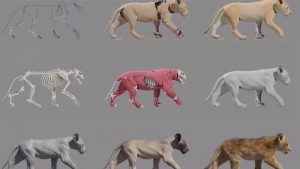
For designing Simba, Adam Valdez focused on cubs of Masai Mara game reserve in Kenya.
Above image shows how Simba was crafted step by step from the scratch to the furry cute little cub.
Lot of times were spent in managing the millions of body hairs of Simba during the animation.
The Lion King Photo Real Animation
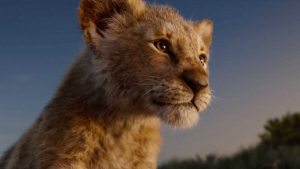
Simba’s hair patterns and shades were decided by software and by placing all details correctly Simba emerged as real lion cub.
Giving movement to Simba’s tiny legs was another big task for the animators.
Individual characteristic of each animal, their way of movement, behaviour, looks everything was photo-real.
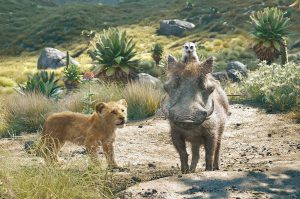
The Lion King Photo Real Animation
Cute and Ugly combination of Timon and Pumbaaa needed research work to find out how they stand, move and what is the function of their paws.

Hyenas
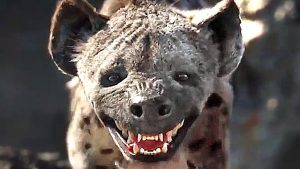
The Lion King Photo Real Animation
Faces of Hyenas had skull shapes and efforts were given to sculpting their eyes and teeth to highlight their threat as they are scavengers in ecosystem.
Animators faced challenges in providing facial expressions to the animal characters; they focused on jaw motion, corners of the mouth and lips for facial movements.
More attentions were given on choreographing the action to convey emotions rather than on mouth such as jumping on the rocks, display of affection between parents and children, prancing around the watering hole etc.
Over all The Lion King opened up new possibilities for the filmmakers to represent reality through photo-real animation.
Connect with us to know more on Photo-Real Animation.


Thursday, 22 August 2019

Maya or Blender 3D Software Battle

Today in this blog we will discuss on which is a better as a software Blender and Maya.
Both Blender and Maya is a 3D Computer Graphics Software and are available on Windows, Mac OS and Linux.
Blender is available freely whereas Maya is a licensed product.
Maya and Blender have their own properties and limitations.
Both of them are used for creating animated moviesvisual effects3D models and video games.
They have helped the professional as well as independent filmmakers in creating their master pieces.
Let’s take a look on both the software individually one by one.

Maya Is Award-Winning Software

Maya or Blender Learn at Maac Chowringhee
Maya was originally developed by Alias Systems Corporation but currently owned by Autodesk Inc.
Maya is mainly used in large studio productions.
This software has already received few Academy Awards for Technical Achievements.
It has various tools for modeling and animation.
An artist can create 3D models in various formats and then animate those models by using animation tools.
Maya has wide tool sets for photorealistic imagery.
It can be used for simulation, modelingmotion graphicriggingvirtual realityUV mapping and character creation.
It is well-known for very detailed and realistic characters development.
Maya is widely used in the film industry from the time of 2000 film Dinosaur.
It has been used in the films like Spider-ManIce AgeLord of the Rings and many more.
Maya’s software interface is customizable; skilled developers can take their productivity to a higher level.
Developers or artists can easily access to Maya Embedded Language (MEL) which can customize the interface by writing down scripts.

Rendering In Maya

Maya or Blender Learn at Maac Chowringhee
Maya has Arnold Renderer to solve complex rendering problems.
Arnold Renderer helps to render high-quality images quickly and efficiently so that artists can spend more time in creation and less time on rendering.
Maya’s robust tool enables the artist to create complex animation tasks; it provides better quality animations.
Maya has powerful toolkit to sculpt the intricate right expressions.
It can open multi projects at the same time.
Maya offers cloth simulation and particle simulation for smoke, dust and spray.
Maya supports ‘Mash’ which is a node-based tool for Motion Graphics.
Maya is heavily used in Film and Television medium by professionals to produce stunning visuals for promotional television commercials to complex animations.
Video Games companies uses modeling tools of Maya to create realistic environment within the games; 3D human figures can be developed easily with this software.
Car designing companies also make use of Maya software to create car models with detailed shape plans; interior of the car components can be shared and reviewed by clients with the help of this software.
Maya’s streamlined toolsets allows developers to produce stunning digital art works.
It is the favorite software for top animation studios like Blue Sky Studios, MPC (Moving Picture Company), ILM (Industrial Light and Magic) etc.
Definitely Maya has certain components which are far superior to Blender but that doesn’t means Blender is despicable.
Blender also possesses unique functionality which makes the task easier for professionals.
Before selecting between Maya or Blender the artist should consider the project requirement, budget and the skills of the modelers.

Blender Is Free And Open Source Software

Maya or Blender Learn at Maac Chowringhee
Blender was started as in –house tool for NeoGeo, a Dutch commercial animation company; it has been already used for television commercials in various parts of the world.
Similar to Maya, Blender also has features like 3D modeling, texturing, rigging, skinning, fluid simulation, particle simulation, animation, motion graphics and UV mapping.
Unlike Maya, Blender supports non-linear video editing and composition.
Maya or Blender Learn at Maac Chowringhee
Blender has in-built Video Editor which allows basic actions like video cuts and complex tasks like video masking.
Blender Video Editor supports live preview, Luma waveform, Chroma vector-scope and histogram displays.
Video Editor has 32 slots for adding videos, images, audios and effects; it also enables audio mixing, syncing and waveform visualization.
Maya or Blender Learn at Maac Chowringhee
Blender comes with in-built compositor which allows the artist to do everything within the program without exporting to third party programs.
Blender Compositor has splendid library of nodes for creating camera effects, color grading and much more.
Compositor is an essential part of Visual Effects or VFX; Blender Compositor can render multilayer OpenEXR files.
OpenEXR files are high dynamic range image file format used for movies.
Full compositing with images and video files is possible through Blender’s Compositor feature.
Hollywood directors have used Blender to produce stunning VFX for the movies and television series.
Other than video editing and compositing; Blender has Python scripting for tool creation, import/export from other formats and task automation.
Python scripting is an object oriented programming language which helps in adding functionalities.

Rendering In Blender

Maya or Blender Learn at Maac Chowringhee
Rendering animation in Blender is bit easier.
Blender’s Cycles is a path-tracing render engine.
Cycles Renderer produces fast, flexible and realistic results.
Cycles uses GPU (Graphic Processing Unit) for faster rendering.

Blender Is Under The Shadow Of Maya

Maya or Blender Learn at Maac Chowringhee
Blender is ideal for small-scale studios or for freelancers or hobbyists.
In the battle between Maya and Blender; Maya wins according to the users because its interface is more clear and standard.
User Interface of Maya is simple and effective on many forums.
Maya is easy to learn as it has expressive tools whereas Blender is a bit difficult to grasp.
To create 3D model; the artist must select the most user friendly 3D modeling software between Maya or Blender; because if the software is not user friendly then lot of time will go waste in searching process.
Maya as a licensed product has lesser bugs whereas Blender is more bug-prone and needs infixes with each version.
Blender is popular among interior design and architecture students because of its amazing tools for texturing and lighting whereas Maya is meant for video gamesdevelopment as it has lot of option for environment creation.
Hence both Maya and Blender are equally good as a 3D application.
Get in touch with us to know more about Maya and Blender.

Sunday, 28 July 2019

Jobs At Animation Industry In India Know More

Jobs At Animation Industry Discussion at At Best Animation Training institute
Hello viewers in this blog we will discuss about the growing animation job market in India.
The growth of animation industry in India is quite amazing and surprising.
From the past few years animation production segment grew at a good speed to fulfill the demand of local animation content and characters for Indian market across TV and Over the Top providers.
Indian animation industry started with the mythological concepts compared to the West where characters like SpidermanBatman generated from comic books.
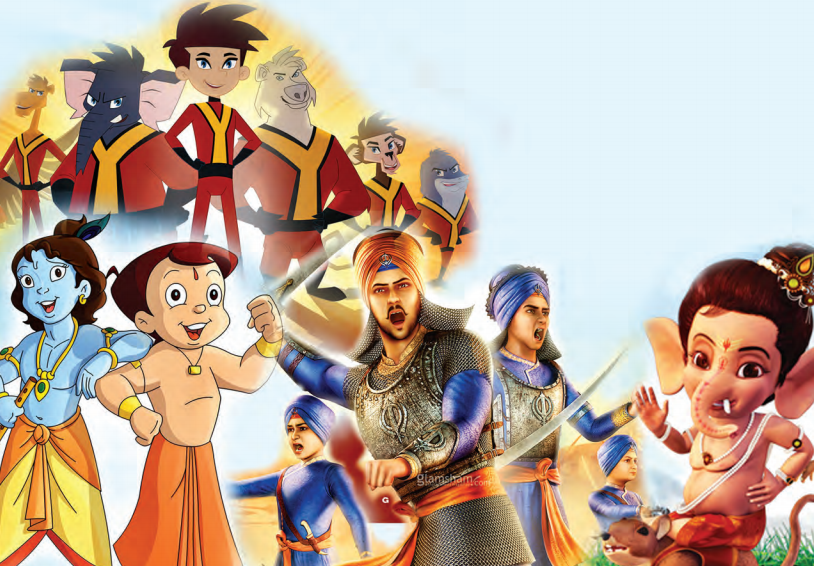
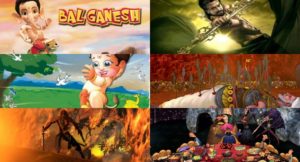
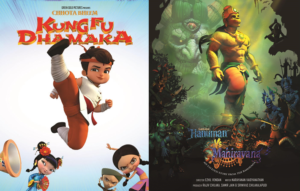
Indian audiences have already enjoyed animated movies like Return of HanumanBal GaneshChhota BheemMighty RajuMotu Patlu and many more on the television as well as movie screens.

Scopes In Animation Industry

Animation Jobs In India At Best Animation Training institute
Animation Industry has a very profitable present and a bright future in India.
According to current FICCI report Indian Animation Industry is growing in excess of 20%.
Indian Animation Industry has become a full-fledged industry now and no longer depends on foreign projects only.
With the flow of huge investments
Animation which is a combination of creativity and technology has evolved in a long way.
Small Indian studios started with handful of people have grown to become large brands now.
The demand for technical skills is rapidly increasing and animation training institutesare trying their best to cope with the demand.
Entry into the field of animation requires skills in sketching, drawing and knowledge of software.
Large studios have their own training facilities to teach the aspirants.
Interested youngsters can easily learn about animation by enrolling themselves in the various Animation Institutes all over India.
Along with the local studios, International producers also look for technical skills in India.
You will be surprised to know that Indian animators created the crowd scenes for the TV series Game of Thrones.
Indian animation studios outsource their artists for the foreign projects and this helps in knowledge transfer.
Talent outsourcing enables to raise the bar with respect to animation quality and creativity.
Indian animators have worked on many Hollywood projects.
Indian government has also started taking interest in this field.
State Telangana has its own set up called Telangana VFX, Animation and Gaming Association (TVAGA) which is a non-profit association led by team of professionals and academicians.
According to KPMG professional firm in India “Investment and collaboration opportunities between animation studios and broadcasters have increased and broadcasters are paying in the range of Rs.1.5 to 4 million per 30 minutes of animation content.
With the flow of huge investments new projects on animation will hit the Indian screens in the coming years very soon.

 Animation As A Career Option

Animation Jobs In India At Best Animation Training institute
Animation is a field where one can enjoy their work, fulfill their dream, feel satisfied and get praise from the clients.
With the coming of animation industry various animation companies have emerged across India.
Cities like Mumbai, Bangalore, Chennai, Trivandrum and Hyderabad have become major animation hubs in India.
The animation studios with their high-tech infrastructures employ high-quality skilled engineers.
These animation studios are capable to offer a full range of services from 2D animation3D animationStoryboards, viral videos, logos, banners and many more.
They provide services according to the need of the customers.
Animation Jobs In India At Best Animation Training institute
There are numerous work opportunities for the quality animators in these animation studios like graphic designermultimedia developer, game developercharacter animator3D modelers etc.
The talented and skilled animators has the scope to get job in the field of advertising, Online and print media, Film and Television, Video Gaming, E-learning etc.
An animator earns a good salary in India and with the experience salary amount increases.
One who want to start own animation business house can search for opportunities hidden in animation industry.
Animation Industry is one of the goldmine fields to explore.

Current Scenario Of Animation In India

Animation Jobs In India At Best Animation Training institute
In India a good quality animation film cost around Rs 8-10 crore which is slightly lower than the feature film budget.
Indian market is not big enough compared to Hollywood market.
“In Hollywood companies like Disney or Pixar spend millions of dollars on every projects” said Ketan Mehta co-founder of animation company Maya Digital Studios.
India is competing with global market and Indian producers are working hard to attract International finance to make animation films that can compete globally.
Animation Jobs In India At Best Animation Training institute
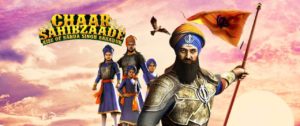
The film Chaar Sahibzaade (2014) directed by Harry Baweja was the highest grossing Punjabi animated movie in India.
This 3D animated film became very successful and received positive reviews from critics for its story, animation and in-depth research.
The budget of this movie was Rs.20 crore and it earned Rs.70 crore globally.
This movie proved that a good well-crafted animated movie can win the heart of Indians.
Animation Jobs In India At Best Animation Training institute
Krayon Picture’s (Pune based 3D animation studio) Delhi Safari (2012) was also well received by the audiences and it won awards too.
Made on a budget of Rs 24 crore this film was one of the highest-grossing Indian films in China.
It collected Rs. 2 crore in India and Rs. 12.5 crore in South Korea.
This proves clearly that there is a market for Indian animated films.
With the success of Indian animation Industry global entertainment firms are choosing India for these reasons-
The cost of animation production in India is very low compared to North America, Korea and Philippines.
Indian animation studios provide low cost, high-quality software engineers
Studios are equipped with good quality of hardware and software.

Future Of Indian Animation Market

Animation Jobs In India At Best Animation Training institute
Current size of Indian Animation Industry is US$ 247 million and is expected to grow at 15-20% per annum.
Indian animation industry employs over 80,000 people.
Gaming, Television and Film Industry are in high demand for skilled animators.
Development in all the aspects of animation industry will place India as a leading country in animation production and outsourcing.
Demand for animation services from India is growing and will grow in future with the emergence of well-organized production sectors.
Hence those who aspire to join this field of animation with immense opportunities kindly Cheer Up and join our MAAC Kolkata Centre.


Sunday, 23 June 2019

Traditional Animation Vs 3D Animation Technique

Hello Readers, Today in this blog we are going to compare between Traditional Animation Vs 3D Animation Technique.


Basically there are two types of animations 2Dimensional and 3Dimensional.

Traditional Animation comes under 2 Dimensional Animation where the drawn picture has length and width but no depth.

Before the advance of computer technology Traditional Animation techniques were used in the Television as well as Filmmaking Medium.

Those who want to pursue their career in the field of Animation they should have the knowledge about both 2D and 3D techniques of animations.

Traditional Animation Technique


Traditional Animation is also commonly known as Classical Animation or Hand-drawn Animation.

In this technique of Animation each frame is drawn by hand on a physical medium.

Until the advent of computers this technique was dominant in cinema.

This animation technique is achieved with a series of drawings on the transparent pages.

Traditional Animation begins by deciding a story first.

After the selection of the story, artist prepares storyboard which is very similar to a comic book.

Storyboard shows the sequences of shots with camera angles and framing.

At the storyboard stage animator may require to redo a scene numerous times before the approval of the director.

Series of images helps to create the plot.

Pencil Is The Tool For Animation


The traditional animators draw one picture or frame at a time.

Pencil is the main tool in the Traditional Animation.

Artist draws on sheet of transparent paper which can be fit into the peg bar in their desk.

Peg bar is the animation tool used in traditional animation to keep the drawings in place.

Artist draws character with the pencil only and these pencil drawings are photographed or scanned and synced with the necessary soundtracks.

Artist can review or improve their work before passing the animation to the supervisors.

Colouring The Cels


Each frame of pencil sketched animation is transferred on the animation Cels, Cels or celluloid pages are then painted and overlaid on top of background images.

Background artists usually paint the sets over which action of animated sequence take place.

Background was generally painted with acrylic paint.

Animators study models, dolls, puppets, real life figures for the inspiration.

In Animation Studios, the Lead Animator draws the Key or Main frames of a character.

The lead animator draws the major points of the action and the junior animator fills the in between or missing frames, this procedure is called Tweening.

Movement of the limbs, eyes, mouth of the character is done by the animator on the key frames.

In big-budget animation production group of animators work together, there is one supervisor animator, one small group of Key animators and large group of assistant animators.

Key animators decide the main action of the character.

The approved pencil animation artworks are then photographed on animation camera loaded with black and white film stock.


Voice Recording on Storyboard

Timing is important in case of this type of animation.

Each frame must match with the proper soundtrack.

Character’s shape of mouth should match with the character’s sound as he/she speaks.

Soundtrack is recorded to make the animation synchronised with the soundtrack.

A story-reel usually consists of pictures of the storyboard synchronised with the soundtrack.

Complete soundtrack consists of music, dialogues (performed by voice actors) and sound effects.

We have Disney movies such as Snow White and the Seven Dwarfs, Pinocchio and Bambi which used traditional animation technique.

In recent time traditional animation is done with computers but most anime and western animated series still use traditional animation technique.

3D Animation Technique

Unlike Traditional Animation 3D is a three dimensional animation technique where a picture has length, width and depth.


3D animation is completely digital animation where computers are used to create character models.

With the development of software like Maya or 3D Max, 3D animation has become user friendly.

In case of 3D animation technique; artists create 3D polygon mesh to make adjustments.

Unlike Traditional animation 3D animation do not need frame by frame animation.

3D objects or models built on the computer monitor can be rigged with virtual skeleton.

Traditional animation lacks the virtual skeleton, it uses separate illustrations and separate transparent layers.

A 3D model usually has many vertices connected by edges and faces to give the visual appearance of 3D object.


The 3D character or model displays full features along with depth.

3D Animators can add colours and textures to the 3D models to make them more attractive and lively.

3D software allows easy control over animations or shots.

3D animation technique is less painstaking compared to the Traditional technique.

Digital 3D characters have been used in many movies as well as video games.

Movies like Toy Story, Moana, Coco, Frozen have computer generated 3D Characters.


Film Toy Story (1995) features all computer generated 3D characters.

3D provides excellent software to sculpt the faces and body of the character.

A person must have in-depth knowledge about digital technology to handle various 3D Software.

The animated 3D Models can display various effects such as simple movement of the eye or lips that can provide great entertainment to the audiences.

3D images can be viewed from various angles and are more realistic.

Not only 3D figures but 3D backgrounds also deliver the sense of depth in the visual content.

In case of 3D animation, artists deal with sculpting, rendering, lighting along with talent of drawings.

Movies That Used Both Traditional and 3D Animation Technique


Disney’s 1999 film Tarzan used both the Traditional technique and 3D animation technique.

Tarzan’s production team developed Deep Canvas that is 3D painting and rendering technique.

With this Deep Canvas technique artists produced CGI background that looked like traditional painting.

Disney’s Treasure Planet is another movie that used traditional animation as well as 3D technique.

Hence here we tried to give an overview about the Traditional Animation Technique and 3D Animation Technique.

Dear Aspirants if you wish to know more about these animation techniques then please contact any of our MAAC Centres in Kolkata.

Thursday, 13 June 2019

Why Female Character Not Used As Protagonist In Animated Kid Series

In this blog we will try to find the reason behind why female character not used as protagonist in animated kid series.

Kids fall in love with the cartoon superheroes.


The mighty, intelligent superheroes can cross any hurdles on the television screens.

But what about super-heroines; why there is too little female protagonist based animated kid series?

From Tenali Raman which was the India’s first animated series, many animated series have launched till date.

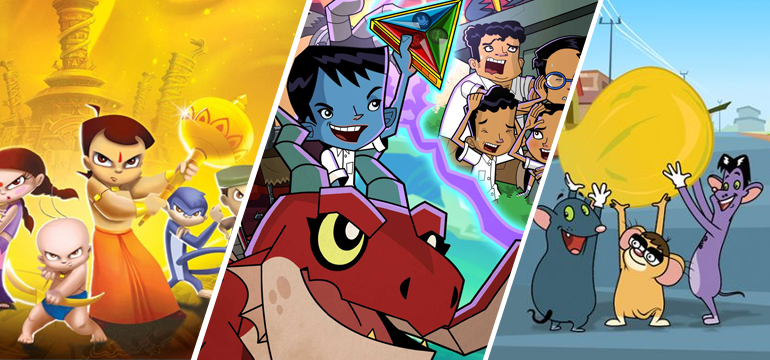
Chhota Bheem, Roll No.21, Pakdam Pakdai, Motu Patlu, Little Singham, Krishna aur Balram and the list goes on.

Keeping in mind the demand of the children new programmes are being launched from time to time.

Male Protagonists In The Popular Animated Series


From 2018 Kids Genre animated series is growing in India.

Green Gold Animation, Discovery Kids, Cartoon Network, Nickelodeon have already made their mark in the world of entertainment business.

Cartoon Channels focus on children as audience; they observe the children’s choices, preferences and consumption habits.

In one of the most popular cartoon shows Chhota Bheem, the main protagonist is the Bheem while Raju, Jaggu, Chutki, Indumati and Kalia are in the supporting roles.


Chhota Bheem has three female characters Chutki, Rajkumari Indumati and Tuntun Mousi.

Seven year old Chutki is Bheem’s closest friend and assists him on his adventures.

In the group of Bheem, Raju, Jaggu, Kalia, Chutki is the most intelligent.

Bheem depends on Chutki for solving puzzles.

Tuntun is the mother of Chutki, she has a laddoo shop, Bheem is very fond of her laddoos.


Last year saw the debuts of characters like Little Singham, Rudra, etc.

Little Singham animated series has strong female characters but has no single female protagonist.

Little Singham which launched on April 2018 on Discovery Kids is produced by Rohit Shetty Pictures.

This heroic television series shows the life of Singham as a little boy who fights criminals to save his city.

Little Singham increased the TRP ratings of the Discovery Kids and placed it into Top 5 league of kids entertainment in India.

Based on the film Singham, it has three female characters Teacher Tara, Babli and Inspector Kavya.

Strong Female Character In Supporting Roles


Female inspector Kavya is a police inspector of Mirchi Nagar along with Little Singham.

Inspector Kavya’s best friend is Hawaldar Karate and her catchphrase is “Dungi Ek Ghoomake”.

Inspector Kavya is a strong female character in the show but she is not protagonist.

In recent times women in different sectors are making their presence felt.

Today women have successfully created their space in the male dominating industries.

Then why these animated cartoon series lack the female protagonists.

Well the producers of these cartoon shows have simply stressed on the business aspect.

According to the market survey producers find the male characters as protagonists are more in demand among kids.

But some of the marketing supervisors believe that the time has come to focus on creating female protagonist based shows.

Producers of these cartoon series have to keep in mind the demand and choice of the Indian kids.

As the head of the Discovery Kids Uttam Pal Singh said “We are creating strong female characters like Inspector Kavya, Babli in Little Singham but we also have to keep in mind what the kids want to watch these days”.


In Little Singham Babli is a brainy girl, daughter of Professor Avishkar, she laughs loudly very much and wears glasses.

The survey says kid audience ratio is 60 per cent boys and 40 per cent girls in India, so the programme head has to organise the programme like that.

If the audience ratio of boys is more than the girls then shows with male protagonists; must be more in the market or entertainment channels.

Television is an art form but the producers can’t ignore the business aspect of these shows.

Rajiv Chilaka CEO of Green Gold Animation has a different view on the lack of female protagonist in animated kid series.

Rajiv Chilaka thinks that the time has come to encourage female centric or female led animated shows for all young ages.

He said he tried to push the channels for the last decade but channel felt that the market is not ready to accept such female character .

Producers are working on the female character or female centric shows now and hopefully audience can see them in the year 2020.


Pinky character of the show Roll No 21 is well-received among young ages.

Pinky is Kris’s classmate, a brainy student and an activist.

Because of nobody has explored with the female centric shows, the demand is more now.

Gender equality and women empowerment plays a big role now days, so the producers can’t ignore that aspect of the society.

Kids are the future generation who can shape the world, so it is the responsibility of the Channels to empower kids with positive thoughts and power to analyse any difficult situation being gender neutral.

Viewership Percentage Has Changed


It is not that we don’t have, we had female character in female centric foreign animated kid series like The Powerpuff Girls in the Cartoon Network Channel.

Another one is the Sally Bollywood produced by French Television Company.

Scenario in Indian context is also changing with the improvement in the every aspect of society.

Girl ratio of viewership has changed from 40 percent to 55 percent.

With the time people mind set is changing, women empowerment is occurring at every sector of the organization.

Hence a lot of scope is developing to create girls based content.

Presently different types of entertainment platforms are also available; earlier it was the channels only running animated kids shows.

In the days of channels it depended upon who is controlling the remotes but now it is changed there are opportunities to explore and experiment.

Devices and gadgets have reached to the hands of every human beings.

As the medium of entertainment can play a vital role in shaping the mind set, broadcasters and animation studios should explore diverse female character for the coming generation.

MAAC Kolkata is a renowned Animation Institution; cultivate your dreams with us.