Showing posts with label best animation training center kolkata. Show all posts

Sunday, 1 September 2019

The Lion King: A Game Changer In Photo-Real Animation

Through this blog today we will let you know how the recent movie The Lion Kingbecame a game changer in photo-real animation.
Directed by Jon Favreau and produced under the banner of Walt Disney Pictures this film is a photorealistic computer-animated remake of Disney’s 1994 traditionally animated film.
It is one of the most expensive films made with a budget of around $260 million.
Critics praised this movie for its visual effects, music and vocal performances.
Some of the well known stars delivered voices for this movie such as Donald Glover, Seth Rogen, James Earl Jones and others.

Innovative Photo-Realism Animation
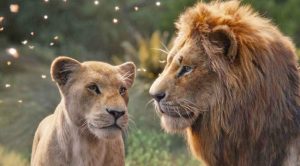
The Lion King Photo Real Animation
From roaming giraffes to the grazing rhinos all looked lifelike in this path-breaking movie.
This movie stunned the audience worldwide by making use of photorealistic computer generated animation.
Lush green backdrops, flowing streams, waterfalls, swaying trees every image looked like scenes from natural documentary.
The Lion King is a game changer movie where Moving Picture Company or MPC provided the visual effects under the supervision of Robert Legato, Elliot Newman and Adam Valdez.
Disney described it as “technologically groundbreaking” approach and not as live-action.
In photo-realism artist reproduces the image as realistic as possible through various digital devices like 3D Scanning, multiple camera capture etc.
Tremendous amount of research and recording of still photography occurred under the guidance of cinematographer Caleb Deschanel to reproduce the reality on the screen.
Director Favreau wanted to make this film in documentary style so creative team visited forest of Kenya to observe and record images of forest land, jungle animals so that they can represent it accurately in digital platform.
Places like Yellowstone National Park and Mono Lake served as inspiration for the Elephant Graveyard and Serengeti National Park inspired the Pride Lands.
Jon Favreau avoided conventional Motion-Capture technique in this movie and relied completely on photorealistic CGI shots.
MPC added new level of details in digital characters look, animation and how the skin and the fur behave.
The Lion King utilized Virtual-Reality technology where cameras were placed in virtual space to emulate live –action production.
Dozens and dozens of African landscape were designed digitally with immense effort so that audience can appreciate the beauty of the place.
To recreate the real world every aspects of lighting, shading, depth of field were taken into account.
Digital Compositing played a big role in this movie as the key focus was on creating reality.

Shooting In Virtual Environment
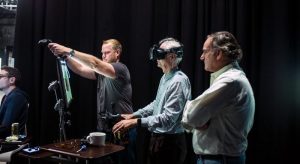
The Lion King Photo Real Animation
The Lion King was shot in virtual reality simulated environment.
Every environment was digitally made and every character was key-frame animated.
VR system enabled cinematographer to create the scene he wanted and then shoot it in real world; VR headset transported cinematographer to virtual set.
At MPC new software were developed for this movie to create scenes with a shaky-cam look of a handheld camera.
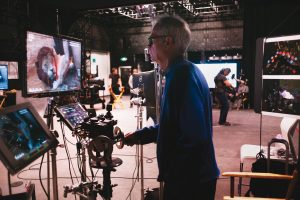
The Lion King Photo Real Animation
Cinematographer Caleb Deschanel actually could change the landscapes, virtual lights, dolly track, camera lenses in huge virtual environment using software option.
Rob Legato VFX supervisor took the virtual production of this film to the next level as he said “Favreau turned ‘The Lion King’ into narrative documentary about animals and nature trying to co-exist in The Circle of Life.
Virtual production reduced time, budgets and physical challenges of shooting on location.
For this film artists worked across studios in Los Angeles, London and Bangalore to deliver magnificent CGI shots.

Photo-Real Characters
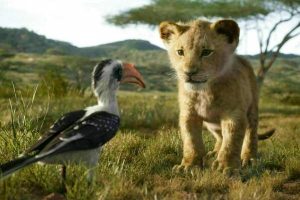
The Lion King Photo Real Animation
Supervisor Adam Valdez at MPC said that they shot 12,000 photographs and whittled it down to 1600 shots of movie.
Through the art of photorealism the team combined the best of live-action into the animation.
Enormous planning and care went into creating the natural world of Kenya into virtual digital screen.
Making realistic animals was the most challenging aspects for animators at MPC.
Animators used artificial intelligence to make virtual characters act in ways that mimicked real animals.
Around 86 various different animal species were brought to life for the film.

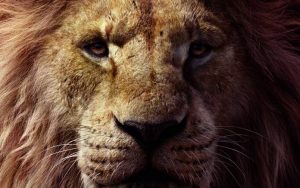
MUFASA
The Lion King Photo Real Animation
MPC made remarkable effort in producing new software for more complex fur shading, rendering and skin simulation.
New software provided so realistic looking Mufasa that you can see minute detail of the skin.
At MPC animators designed each character by paying close attention to anatomy, fur or feathers, texture, shading of eyes and movements were made authentic according to real life.
Animation Supervisor Andy Jones animated the body muscles according to the body weight.
Animators worked together to make the 3D sculpting of animals as real as captured photographs of animals in Africa.
Each photorealistic character took about nine months to fully develop and was built by mix of real-life references and characters from original movie.
Disney successfully blended together live-action with virtual reality, CG animation and photo-real imagery.

SIMBA

The Lion King Photo Real Animation
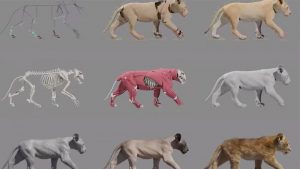
For designing Simba, Adam Valdez focused on cubs of Masai Mara game reserve in Kenya.
Above image shows how Simba was crafted step by step from the scratch to the furry cute little cub.
Lot of times were spent in managing the millions of body hairs of Simba during the animation.
The Lion King Photo Real Animation
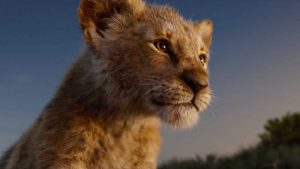
Simba’s hair patterns and shades were decided by software and by placing all details correctly Simba emerged as real lion cub.
Giving movement to Simba’s tiny legs was another big task for the animators.
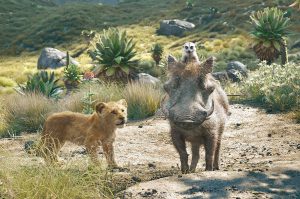
Individual characteristic of each animal, their way of movement, behaviour, looks everything was photo-real.
The Lion King Photo Real Animation
Cute and Ugly combination of Timon and Pumbaaa needed research work to find out how they stand, move and what is the function of their paws.

Hyenas
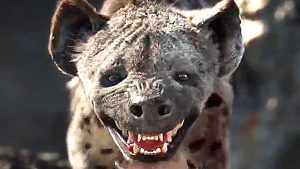
The Lion King Photo Real Animation
Faces of Hyenas had skull shapes and efforts were given to sculpting their eyes and teeth to highlight their threat as they are scavengers in ecosystem.
Animators faced challenges in providing facial expressions to the animal characters; they focused on jaw motion, corners of the mouth and lips for facial movements.
More attentions were given on choreographing the action to convey emotions rather than on mouth such as jumping on the rocks, display of affection between parents and children, prancing around the watering hole etc.
Over all The Lion King opened up new possibilities for the filmmakers to represent reality through photo-real animation.
Connect with us to know more on Photo-Real Animation.


Thursday, 27 June 2019

Chhota Bheem From TV To Commercial Products

Hello, Today in this blog we will take you to the fun-filled tour of cartoon character Chhota Bheem from Television Channel to Commercial products.


Chhota Bheem is an animated comedy television series created by Rajiv Chilaka.

It was premiered in 2008 on Pogo TV.

Chhota Bheem is inspired by the legendary Bheem from the Mahabharata and it’s an original co-production between Turner International India and Hyderabad-based Green Gold Animation Studios.

Pogo channel’s cartoon series Chhota Bheem focuses on adventures of a boy named Bheem (wearing orange colour Dhoti) and his friends in the fictional kingdom of Dholakpur.

Bheem and his friends Chutki, Raju, Jaggu, Kalia and Dholu-Bholu are usually involved in protecting Raja Indravarma (king of Dholakpur) and his kingdom from evil forces.

Chhota Bheem is one of the most popular, entertaining cartoon animated series for children in India.

Chhota Bheem won the Best Animated TV Series award at the Golden Cursor Awards 2009 held in Mumbai, India.

Chhota Bheem In The Advertisement of Savlon, Dettol, Parle-G and Kellogg.


Chhota Bheem character has become a phenomenon in India and it is Kid’s favourite cartoon character.

Bheem is fun-loving adventurous boy, gifted with extraordinary superhuman strength.

In the advertisement of Savlon Fresh plus Protect Soap from ITC, Bheem fights with the purple Germ.

When the villagers of Dholakpur feel uneasy by the bad smell of the germ at that time Bheem appears and gives a strong punch of Savlon on the face of Purple Germ.

With the slogan “Ab Germs Nahi, Freshness Failega” (No Germs only Freshness)Bheem kills the purple germ.

In Savlon Handwash 10 second advertisement, Chhota Bheem along with Jaggu and Chutki fights with Germs, as the slogan says “Savlon protects from 1 million germs”.


Kids love to see their favourite cartoon character in the advertisements.

Theme of Chhota Bheem is very much universal and is being liked by all kids irrespective of their religion and region.

As health and hygiene is much important issue, kids need to be educated regarding cleanliness.

When Chhota Bheem fights and kills the evil that brings joy and fun within children.

Children are quick learners, when it comes to teach any good habits to children Audio/Video medium plays a great role.

Through colourful illustrations, music and animated figure message can easily be delivered to the young kids.


Brand Dettol was also keen to run a campaign to reach out to kids and educate them about the importance of hand wash and hygiene.

Dettol did not want kids to watch a simple video; they wanted to engage the user.

GreedyGame Media offered a solution which allowed Dettol to push the product functionality at real life incidents.

Dettol reached out to kids through mobile games.


Dettol joined hands with GreedyGame, an in-game native advertising platform and Nazara Games, one of the largest mobile game publisher in India.

Dettol with GreedyGame and Nazara launched hygiene products hand wash and hand sanitizer.

Dettol’s campaign was successful in building a strong brand affinity.

In 30 days campaign, 1.7 million unique users were reached and the jingle was played around 131 million times.

Dettol team along with Nazara Games created 3 games Chhota Bheem –The Hero, Chhota Bheem-Jungle Run and Chhota Bheem-The Race.

In the Mobile Game Chhota Bheem –The Hero, Dettol Power was initiated, by accumulating the brand logo, the player would turn resistant to attacks by germs and ugly creatures for a couple of seconds.


In Chhota Bheem –Jungle Run, the theme song was played each time Bheem would have needed to sanitize his hands when he was attacked by a monster or when he was fell down.

It showed Bheem using Dettol sanitizer to clean his hands.

This game also shows Bheem collecting Laddoos which is his favourite food.


In Chhota Bheem-The Race, has Dettol power ups which give Bheem super powers to run faster and attack opponents.


Nazara Technologies previously integrated Dabur Real Juice with its game Chhota Bheem.

As Manish Agarwal CEO, Nazara Technologies says Mobile gaming platform is a medium that is highly interactive, one can create own brand proposition in a very non-intrusive contextual manner.

Nazara Technologies has 12 million monthly active users out of which 8 million are kids.


Chhota Bheem Himalayan Adventure –Parle G Ad shows Bheem along with his friend climbing the mountains and when Kalia says that it is impossible to climb anymore, Bheem takes out Parle G biscuits and says everything is possible with Parle G.

This advertisement was made for the publicity of the movie Chhota Bheem Himalayan Adventure (2016).


Nazara Games also launched Parle-G biscuits in the Jungle Run Games.

In this game Chhota Bheem’s Laddoos had been replaced by Parle-G biscuits and when the player wins the game a special jingle is being played.

The idea of introducing Parle-G biscuits along with Laddoos provided consumer to interact in an interesting way.

According to the report around 1.2 billion virtual Parle-G Biscuits were consumed on the Chhota Bheem Mobile Game.

The brand’s tune or song is being played as jingle in these games.

Chhota Bheem Mobile Games has been experienced by over 3.4 million gamers since its launch in November 2015.


Kellogg also signed unique promotion deal with Chhota Bheem TV series.

This advertisement shows Chhota Bheem in the Chocoland which is surrounded with river of milk, chocolaty waterfall and volcano.

There is a character Coco, the Kellogg Mascot.

In Rs 800 Crore organised Indian breakfast cereal market, Kellogg holds a more than 60% share and the competition is tough as companies such as GlaxosmithKline and others push products oats, Muesli etc.

Kellogg is also promoting its product in a unique way to give better experience to the children.

Therefore here we got to know how children’s favourite character Chhota Bheem has come out of the television box and reached to the breakfast table.

Our MAAC Institute offers Courses on 2D–3D Animation, VFX and Designing.

If you want to be a part of such magnanimous then join us and pursue your career in Multimedia.

Sunday, 23 June 2019

Traditional Animation Vs 3D Animation Technique

Hello Readers, Today in this blog we are going to compare between Traditional Animation Vs 3D Animation Technique.


Basically there are two types of animations 2Dimensional and 3Dimensional.

Traditional Animation comes under 2 Dimensional Animation where the drawn picture has length and width but no depth.

Before the advance of computer technology Traditional Animation techniques were used in the Television as well as Filmmaking Medium.

Those who want to pursue their career in the field of Animation they should have the knowledge about both 2D and 3D techniques of animations.

Traditional Animation Technique


Traditional Animation is also commonly known as Classical Animation or Hand-drawn Animation.

In this technique of Animation each frame is drawn by hand on a physical medium.

Until the advent of computers this technique was dominant in cinema.

This animation technique is achieved with a series of drawings on the transparent pages.

Traditional Animation begins by deciding a story first.

After the selection of the story, artist prepares storyboard which is very similar to a comic book.

Storyboard shows the sequences of shots with camera angles and framing.

At the storyboard stage animator may require to redo a scene numerous times before the approval of the director.

Series of images helps to create the plot.

Pencil Is The Tool For Animation


The traditional animators draw one picture or frame at a time.

Pencil is the main tool in the Traditional Animation.

Artist draws on sheet of transparent paper which can be fit into the peg bar in their desk.

Peg bar is the animation tool used in traditional animation to keep the drawings in place.

Artist draws character with the pencil only and these pencil drawings are photographed or scanned and synced with the necessary soundtracks.

Artist can review or improve their work before passing the animation to the supervisors.

Colouring The Cels


Each frame of pencil sketched animation is transferred on the animation Cels, Cels or celluloid pages are then painted and overlaid on top of background images.

Background artists usually paint the sets over which action of animated sequence take place.

Background was generally painted with acrylic paint.

Animators study models, dolls, puppets, real life figures for the inspiration.

In Animation Studios, the Lead Animator draws the Key or Main frames of a character.

The lead animator draws the major points of the action and the junior animator fills the in between or missing frames, this procedure is called Tweening.

Movement of the limbs, eyes, mouth of the character is done by the animator on the key frames.

In big-budget animation production group of animators work together, there is one supervisor animator, one small group of Key animators and large group of assistant animators.

Key animators decide the main action of the character.

The approved pencil animation artworks are then photographed on animation camera loaded with black and white film stock.


Voice Recording on Storyboard

Timing is important in case of this type of animation.

Each frame must match with the proper soundtrack.

Character’s shape of mouth should match with the character’s sound as he/she speaks.

Soundtrack is recorded to make the animation synchronised with the soundtrack.

A story-reel usually consists of pictures of the storyboard synchronised with the soundtrack.

Complete soundtrack consists of music, dialogues (performed by voice actors) and sound effects.

We have Disney movies such as Snow White and the Seven Dwarfs, Pinocchio and Bambi which used traditional animation technique.

In recent time traditional animation is done with computers but most anime and western animated series still use traditional animation technique.

3D Animation Technique

Unlike Traditional Animation 3D is a three dimensional animation technique where a picture has length, width and depth.


3D animation is completely digital animation where computers are used to create character models.

With the development of software like Maya or 3D Max, 3D animation has become user friendly.

In case of 3D animation technique; artists create 3D polygon mesh to make adjustments.

Unlike Traditional animation 3D animation do not need frame by frame animation.

3D objects or models built on the computer monitor can be rigged with virtual skeleton.

Traditional animation lacks the virtual skeleton, it uses separate illustrations and separate transparent layers.

A 3D model usually has many vertices connected by edges and faces to give the visual appearance of 3D object.


The 3D character or model displays full features along with depth.

3D Animators can add colours and textures to the 3D models to make them more attractive and lively.

3D software allows easy control over animations or shots.

3D animation technique is less painstaking compared to the Traditional technique.

Digital 3D characters have been used in many movies as well as video games.

Movies like Toy Story, Moana, Coco, Frozen have computer generated 3D Characters.


Film Toy Story (1995) features all computer generated 3D characters.

3D provides excellent software to sculpt the faces and body of the character.

A person must have in-depth knowledge about digital technology to handle various 3D Software.

The animated 3D Models can display various effects such as simple movement of the eye or lips that can provide great entertainment to the audiences.

3D images can be viewed from various angles and are more realistic.

Not only 3D figures but 3D backgrounds also deliver the sense of depth in the visual content.

In case of 3D animation, artists deal with sculpting, rendering, lighting along with talent of drawings.

Movies That Used Both Traditional and 3D Animation Technique


Disney’s 1999 film Tarzan used both the Traditional technique and 3D animation technique.

Tarzan’s production team developed Deep Canvas that is 3D painting and rendering technique.

With this Deep Canvas technique artists produced CGI background that looked like traditional painting.

Disney’s Treasure Planet is another movie that used traditional animation as well as 3D technique.

Hence here we tried to give an overview about the Traditional Animation Technique and 3D Animation Technique.

Dear Aspirants if you wish to know more about these animation techniques then please contact any of our MAAC Centres in Kolkata.

Wednesday, 19 June 2019

Disney Animation’s First Ever VR Short Cycles

In this blog we will discuss about the Disney Animation’s first ever VR Short Cycles.

As we all know that VR or Virtual Reality is the use of computer technology to create a duplicate real environment.


VR takes its audience to the interactive 3D worlds.

Till now many Game Videos have been created for the VR.

But it is the first time that a short animated film has been developed by the famous Walt Disney Animation Studios called Cycles.

Walt Disney has always broken the boundaries in terms of technology and storytelling.

Walt Disney is responsible for first animated short, first animated feature-length film and now first VR Short film.

As a growing medium; VR is getting ready to find its place in the world of filmmaking.

A person with virtual reality equipment is capable of looking around the colourful artificial world, move around in it and interact with virtual features.

Inauguration Of VR Short Cycles


Last year Walt Disney Animation Studios launched its first VR short film called Cycles that took four month of hard labour.

The short film made its debut at the Annual Conference of Computer Graphics SIGGRAPH, Vancouver in the month of August 2018.

SIGGRAPH generally showcases world’s leading professionals, academics and creative minds every year.

Cycles was screened at SIGGRAPH’s immersive pavilion dedicated to virtual and mixed reality.

The team of this VR Short believes that Cycles will help the viewers to form a stronger emotional connection with the film.

Cycles is directed by Jeff Gipson who is currently working at Walt Disney Animation Studio.

In an interview Jeff Gipson says that “VR is an amazing technology and many times the technology is really celebrated. We hope more and more people will feel the emotions we aimed to convey with our story”.

Home Is Where The Heart Is


Cycles is Jeff Gipson’s VR directorial debut.

Gipson joined Walt Disney Animation Studios in 2013 and served as lighting artist on Disney movies like Frozen, Zootopia and Moana.

Jeff Gipson believes that every house has a unique story to tell, every character has a story.

Jeff wanted to create a story about a house, so that the viewer can witness the life happening around them.

Cycles is about a family, their real ups and downs, happy and sad moments in life.

Jeff Gipson is very excited to tell story in this new VR medium.

He says “VR allows one to look anywhere and can transport one to a different world. VR provides experience from different angles and every detail”.


Cycles an experimental short film by Jeff Gipson revolves around the true meaning of creating a home and the life inside its walls.

The film follows the lives of a family consisting of Bert, Rae and their daughter Rachel.

The main characters name Bert and Rae are named after Jeff’s grandparents.

VR users can observe the family’s lifecycle before, during and after living in their home.

The story of ‘Cycles’ drew the inspiration from the Gipson’s childhood experiences in his grandparent’s home.

As a passionate freestyle BMX rider, Jeff used to travel around Los Angeles abandoned homes in search of empty pools to ride.

Cycles is the combination of his experiences and fond childhood memories.

‘Cycles’: Result Of Team Work


The production team completed Cycles in four months with about 50 team members as a part of professional development program at the studio.

VR filmmaking needs creativity to translate a story to the VR screen.

Pre-visualization of the Cycles narrative was a challenge for Jeff’s team.

Jeff and his team of artists used Quill VR painting techniques and motion capture for Cycles storyboard.

Painters and artists generated 3D models of characters before hand and drew scenes for the VR space.

The team also came up with innovative ideas for the use of light and colour.

They took care of every feature that has been used in the Short.

Cycles is the combination of 6DOF (Six degrees of freedom) VR technology with Disney’s classic art style.

This VR Short is a unique experience that blurs the line between modern and classic animation.

Jeff further says that “Editing is difficult in VR and I wanted one continuous seamless kind of shot and so to bridge the story beats we used time-lapse.”


One can experience this beautifully designed VR short by putting on the sophisticated helmet rig which comes with headphones.

As this VR will start you will be in a mid-century home on a sunny day; the foyer, the kitchen and backyard available in 360 degree view.

It starts with the emotional journey, as Rae gets ready to leave her home after her husband Bert’s passing.

Then you will go backward more than 50 years and pause at the crucial moments in the family’s life.

As the surrounding, characters and furniture changes the plot also changes from the 50s to the present.

This VR Short will definitely take you to the beautiful and breathtaking experiences.

Throughout this VR Short one can look around in any direction and Cycles will fade to grey whenever the eye contact will break with the focus point of the scene.

Jeff Gipson wanted to tell a story in a new way and in a new medium that is why he was hooked to VR.

When asked why he chose VR to tell the story Jeff replied “I wanted to show the homes and the things that happen inside the homes; VR was the answer in my head; as VR is a wonderful medium that immerse you fully.”

VR Short Cycles has successfully attracted huge amount of enthusiasts.

People are enjoying this 3D animated Virtual Reality Short with excitement and curiosity.

VR is a medium which is still unexplored in the area of filmmaking.

Hence there is a lot of opportunity to explore this Virtual Reality Medium.

Project like Cycles will give hope for the future of VR storytelling.

Come, Join and Learn more about VR Technology with our well-established MAAC Kolkata Institution.

Sunday, 16 July 2017

VIRTUAL REALITY KITS: GATEWAY TO NEW EXPERIENCES

If you haven’t heard of virtual reality, you must have been living under a rock for the past few years as far as technology is concerned.

But there’s always time for learning, so if you’re in the dark about VR – as it is popularly known – you can understand what it means by the name itself.

Virtual means ‘near’, and reality is our experience of our surroundings. Therefore, it follows that virtual reality is a computer-generated environment that enables you to experience a different reality.


This reality could be anything, from another room somewhere else, a jungle or desert, the bottom of the ocean, or even the inside of your organs! The possibilities are literally endless.

This is a device that fits around the head over your eyes and visually separates you from your actual physical environment.In order to experience virtual reality, you need to have a virtual reality kit (which is also called a virtual reality headset).

Then, images and media from another device (a computer, gaming console, or handheld device like a mobile phone) can be viewed through the lenses on the headset.

Now, we experience and understand the world through our five senses of sight, touch, smell, hearing and taste.

Our brain processes the inputs from these senses by comparing them to what we already know to make sense of what we know as reality.

Due to this, when you replace your physical surroundings with a virtual one by changing what you see, you trick your brain into accepting an alternate reality.

And with the sizeable amount of high-quality content available these days, it is easy to get immersed in the virtual world – which has contributed to the popularity of the VR kit as a gadget of choice for our generation of wanting more and better.

Not even the Uncanny Valley – which is when something mimics reality, but doesn’t quite get it right because of missing or misplaced details – is much of a problem these days, but synchronicity of sensory, hardware and software inputs is a must for a good VR experience.

With a VR kit, you can tour exotic foreign locations, experience a film as though you are part of the action, immerse yourself in the environment of a video game, or even design spaces from the comfort of your living room sofa.

As with most products, there are different kinds of virtual reality kits to cater to the needs of different users.

In general, though, there are two types of virtual reality kits based on mobility: mobile ones that allow for free movement, and tethered ones which need to be plugged in to an external device to draw power and content.

Let us take a look at VR kits on the basis of features available.

Back to the Basics: This kind of virtual reality kit simply has a slot for your mobile phone, two lenses to view content through, and a band to hold the headset in place around your head.
Google’s Cardboard headset is a prime example of a basic virtual reality kit.

It consists of a cardboard box with an opening for a mobile device, two lenses, a cut-out for the user’s nose and a headband.

And the best part?

The user gets to fold up the cardboard sheet before the first use.

Its simple and efficient in that it gets the job done as far as a virtual reality experience is concerned, and captures the minimum design requirements of a VR headset.

There are several applications that are Cardboard-friendly (most notably the online video giant, YouTube), and one can download VR-friendly media players that have their own content as well as can play the user’s content from device storage.

Games are difficult to play as basic VR headsets do not have motion tracking systems or controllers.

They are, however, very portable as they are not dependent on an unwieldy external source for content or power supply.

Other brands of basic virtual reality kits include Samsung’s Gear VR, VR Box and Procus.


The Gaming-Friendly: If you move past the basics, virtual reality kits at the higher end of the price and power spectrum have features like advanced motion tracking, a dedicated display in the headset, external tracking cameras or laser systems, and some draw power and content from gaming consoles or personal computers, leaving the headset free for richer quality of content experience.
The inbuilt display supports high-definition resolutions that allow for more engrossing game play.

The popularity of virtual reality kits for immersive gaming is indisputable.

Sony, the makers of the PlayStation series of gaming consoles, has designed a dedicated virtual reality kit for PS users. HTC Vive and Oculus Rift are other popular virtual reality kits as far as gaming is concerned.

The Vive is the more expensive of the two, and both come with top of the line motion tracking sensors for superior control during game play.

With the headset and motion tracking working in conjunction with each other, and good game design, you can look around and interact with objects in the virtual space quite seamlessly.

These headsets even come with some games pre-installed, and support the Steam platform for further expansion.


Specialty kits: VR kits are also used in the medical field for trainee surgeons to practice with. Microsoft has been said to be designing a mixed reality VR prototype that will integrate with the Windows operating system and take business productivity one step farther.
The featurette shows the kit being used for holographic communication and virtual 3D design.

All in all, virtual reality is an up and coming trend in the media world.


Today and you can make the most of it by trying out a VR kit yourself.

Or, if you’re more a behind the scenes person, by taking advantage of the courses at Maac Kolkata centres and developing your knowledge of how the content that goes into VR is made. Either way, the (virtual) world is yours!