Monday, 20 August 2018

Recounting the Top-Notch Video Editing Software

Regardless of whether you are an expert video editorial manager or just a beginner learning video editing, it is considered as an inclusive method to appreciate, enjoy, share and make recollections that have the ability to last forever.

Regardless of in case you’re catching life’s ideal (and most noticeably bad) minutes by means of a cell phone, DSLR or even a simple to use the camera, altering video will enable you to feature and offer the recording with the world.


Which video editorial manager you use to transport your last item is best dictated by your utilization case, the kind of PC you claim and, obviously, your financial plan.

In view of those decisions, here’s our interpretation of the best video editors accessible today.

The Best Among the Best Video Editing: Adobe Premiere Pro


Truly, to be sure the best editing programming software is here as the significant cross-stage, uber-well known timetable based video supervisor that has long set the essential thing for the video altering programming.

Adobe Premiere Pro is fit for overseeing all kind of video editing .

This product is prepared to make and create video for an expert generation, including film, TV and the Web.

Adobe premiere pro proffers enough drive in order to deal with 360-degree virtual reality video to 8K film all in local configuration.


It can even import and fare film from focused programming, for example, Final Cut Pro.

While most expert review programming can deal with multi-cam altering, Premiere Pro goes one stage past, taking care of the same number of sources as vital with the same number of edges as required.

The incorporation of the packaged Lumetri Color Panel permits propelled shading acclimations to be taken care of easily.

Furthermore, Adobe’s combination with After Effects and Photoshop includes much more explanation behind expert review editors to pick Premiere Pro.

2nd Ranker and Best for MACs: Final Cut Pro (video editing)


Final Cut Pro X from Apple falls into the dimension of the prosumer category as it strides the line between two groups of users.

The first group resembles a product for consumers who aspire to rise up their standard of the video-editing game and the second is for the purpose of experts who need strong editing tools and devices.

It does not have a customary timetable track interface, which is sufficient to drive a few clients away, however, the product is natural and effective in any case.

It has extraordinary hierarchical instruments like libraries, appraisals, labeling, auto investigation for countenances and scenes, and programmed shading coding for track-particular clasps, valuable console alternate ways and simplified media bringing in give Adobe’s Premiere Elements a keep running for its cash.


Shockingly, you can’t specifically open undertakings from Final Cut Pro 7 or before, however, there are some outsider modules that will help you out there.

Corel Video Studio- (video editing)


Corel VideoStudio is a unique editing software that consists of all the characteristics and fundamentals of the other top-notch products in this list.

This list comprises of 360-degree VR(Virtual Reality) and 4K support, however, it also has the difference of being the first-class piece of video editing software that offers motion tracking system.

If you’re not familiar with this feature of Corel then try it now.

It enables you to track certain objects throughout your cut portions.

A major part of the products on this list come furnished together with the motion tracking system.

However, VideoStudio till now presents itself as the topmost motion tracking systems in the world.

Pinnacle Studio 21


At the higher end of the Corel, product offering is Pinnacle Studio, which costs more than twice as much as VideoStudio.

What do you get for the additional cash? All things considered, not exclusively does Pinnacle come promptly furnished with every one of the highlights you’d expect from a more elite class item—movement following, 360-degree VR bolster, 4k bolster, multi-cam, and so forth.— yet you’d be unable to locate a quicker item available regarding rendering.

For the greater part of its highlights, Pinnacle’s interface is still as easy to understand and instinctive as anything on this rundown.

In this manner, is you have the requirement for speed, and you wouldn’t fret spending a couple of additional bucks for it, Pinnacle may be the item for you.

The Runner-Up of Editing: Premiere Elements 15


Premiere Elements 15 is time and again regarded as a pared-down version of Adobe’s Premiere Pro.

It is a well-designed video editor that enables exclusive video editing in cross-platform (Mac and Windows 10) patterns.

Bolstered by its user-friendliness, Premiere Elements 15 consists of features and unique options that can be enjoyed by both the beginners as well as the expert specialists.

When you import media, the work process is standard for sorting out video cuts into a course of events, applying any post-impacts and after that seeing/distributing the last item.

Fundamental augmentations, for example, making video collections, improving sound, de-initiation scenes and settling video are on the whole present to help make the ideal item.

Adobe even includes some keen highlights, for example, flipping around grimaces or including a movement obscure for making a sensational take a gander at games or action scenes.

The inherent buddy coordinator will help keep past resources arranged and composed for rapidly situating after transfer, so it’s anything but difficult to re-find already completed and draft items.

The Unique: Machete Video Editor Lite


Last but not the least, it will be unfair to not mention the name of Machete.

Doing such an injustice isn’t in our blood so finally but not ultimately, Machete Video Editor Lite allows the user to cut, copy, as well as paste distinct sections of the video.

As the Machete site puts it, Video Editor Lite was “intended for snappy and straightforward ‘cutting’ of your video documents.”

The program’s natural interface implies you won’t need to sit around idly rearranging through specialized help archives.

The primary drawbacks to the program?

It just backings the AVI and WMV video organizations, and it doesn’t take into account sound altering.

In any case, on the off chance that you have zero video altering background and just need to make straightforward alters, it’s an incredible choice.

Aspiring to acquire effective knowledge of video editing ?

Then why are you thinking so late, come to our place at MAAC Chowringhee, MAAC Rashbehari, and MAAC Ultadanga centers to gather more information in details about Animation–VFX–Gaming–Multimedia and other architectural courses.

Click here and register.

Sunday, 19 August 2018

Recognize the Unknowns of Clay Animation


 Clay Animation is a century-old art in the history of art and culture.

Clay Animation has a rich history that scopes back to the year 1897 when a malleable, oil-based modeling clay called “plasticine” was designed.


While not all of Chicken Run is done in 100 percent clay, Aardman remains nearby to conventions that have developed over a century.

The characters start as mud and after that are shaped into armatures with latex covers.

The soonest surviving utilization of the strategy is The Sculptor’s Nightmare, a farce on the 1908 presidential decision.

In the last reel of the film, a section of mud on a platform springs up, transforming into a bust of Teddy Roosevelt.

Mack Sennet and D.W. Griffith, two vital pioneers of the early silver screen, show up in the no-frills segment of the film.

In 1917, the main female artist of any sort, New York’s Helena Smith Dayton, utilized genuine doll garments and human hair to add authenticity to her mud portrayals of tall tales and exemplary writing, including Romeo and Juliet.

The B-Movie Guru

Hop forward a couple of decades to locate another enhancements ace inspired by tall tales. Beam Harryhausen made clay dinosaurs as a child, at that point landed his first position as a model artist on George Pal’s Puppetoons.

Afterward, helping Willis O’Brien (the virtuoso who in 1933 turned an 18-inch-tall feline hide secured show into King Kong), Harryhausen chipped away at Mighty Joe Young in 1949.


Harryhausen idealized his art in films like 1958’s The Seventh Voyage of Sinbad and 1963’s Jason and the Argonauts.

This film incorporates the well known vivified and animated skeleton succession that took 4 1/2 months to make the entire animated movie.

As a result of such animated works, claymation became a genre in the industry of Animation and Visual Effects.

In 1992, he got an uncommon Oscar for motivating a whole age of illustrators and effects specialists.

Then, with films being supplanted by TV all through the 1950s, Warner Bros. cut back on its cel toon yield by a third, halting totally by 1969.

A less complex made-for-TV style, by Hanna-Barbera, had assumed control.

The time was appropriate for clay’s first hotshot: Gumby.


“The entire inspiration for making Gumby was to give youngsters something of genuine esteem,” says the green person’s maker, Art Clokey. “Gumby was communicating my adoration for kids by recounting stories from the heart.”

Clay Modelling

Clay Animation had to go through systematic stages of clay modeling.

Clay modeling can be defined as the artistic creation of patterns or models with the help of clay through different shapes and patterns.

Thus it can be said that clay modeling is a very significant part of Clay Animation.


Claymation or Clay Animation is most probably utilized in Stop Motion Animation and in many stop-motion films like Kubo and The Two Strings, Coraline, Mary and Max, Creature Comforts, Tim Burton’s Corpse Bride and so on.


Prior to the rise of advanced computer graphics and pc Animation technologies, Clay Animation with the associated physical Animation models were the fundamentals for Physical Animation or 3D Animation.

In those eras, either cartoon is drawn for 2D Animation.

This physical movement industry flourished all through the 1980s and into the 1990s as the prevailing model until the rise of computer-generated imagery (CGI) and Virtual Animation.


Clay Animation is said to have many benefits.

It administers that vicinity which preserves an exclusively original appearance for physical Animation.

However, it can also be performed with limited resources.

But there are certain disadvantages too.

Among this difficulties is the blue-collar procedure of repositioning clay objects between frames.

According to the view of the industry experts, they stated that only a 30min clay animation video stream comprises of thousands of frames.

And each of which contains small tweaks to the physical clay models.

Despite the fact that CGI and virtual or computerized liveliness have to a great extent assumed control from physical Animation, Clay Animation still exists and is utilized for a few sorts of undertakings.

For instance, littler studios without access to virtual activity instruments may utilize mud movement.

A few ventures may utilize it as a retro or creative decision.


Now and again, architects join mud clay animation with innovative computer Animation tools.

Clay Animation recovered its begin path in 1897 when demonstrating mud was concocted. Craftsmen started to shape characters out of clay.

They would then take different still photos of the character, moving the character somewhat in the middle of each photo.

At the point when those photos were shown rapidly in progression, they made the dream of development.

The primary Claymation film — The Sculptor’s Welsh Rarebit Dream — was delivered in 1908 by Edison Manufacturing.

Since clay characters must be moved or changed just marginally in the middle of each and every still picture, Claymation is a considerable measure of work.

Accordingly, Claymation films are regularly shorter than different sorts of animated movies.

For instance, a common vivified animated motion picture requires 24 outlines — likewise called stops — for one moment of playback.

That compares to 24 still pictures for each second of film time.

Since mud activity is so much work, mud artists frequently do twofold stops.

This implies they utilize a similar picture twice in succession to eliminate the number of steps required.


Doing pairs, despite everything they require 12 still pictures for each second of film time.

Each still picture must fluctuate just marginally from the past one to make the dream of smooth development.

In the event that the progressions between pictures are excessively awesome, the film will seem uneven.

So how about we crunch the numbers to make sense of exactly how much function a basic 30-minute claymation film would require.

At a rate of 12 stops for each second of film time, a 30-minute clay movement motion picture requires 21,600 still pictures!

A full-length (hour and a half) Claymation motion picture would require 64,800 still pictures.

Finale

Would you be able to envision taking 21,600 still pictures while rolling out minor improvements to Clay Animation characters in the middle of every single picture?

The artists who have an inward inertia for clay modeling can find clay animation more interesting than any other types of Animation.

It is a suggestion from the MAAC Kolkata team of Chowringhee, Rashbehari, and Ultadanga that Animation can be a great career in the very long run and Clay Animation is a part of it.

Not just we teach how to perform Animation but also train to become a master of Visual arts and hand arts.

Modeling is simultaneously followed by sculpting which is carried out by the artists and the modeler.

To be true, clay animation, in the present market has come up to the trends of the generation.


It needs more emphasis as well as hard work to perform clay animation as compared to other Animation techniques.

So if your motive is Animation and your still thinking, then don’t contemplate just knock the door of MAAC and come into the myriad world of Animation.

Thursday, 16 August 2018

THE NOTABLE REVOLUTION OF ANIMATION IN VIDEO GAMES

In this blog post, MAAC Kolkata is going to discuss the remarkable revolution of use of animation in Video Games in the gaming industry.


MAAC Kolkata has taken this initiative to write on it so as to educate the beginners how gaming evolved and VIDEO GAMES from the primordial times.

We, the youngsters and perhaps the computer lovers, as a whole love video games.

Computer games have come an extremely long path since its beginnings the distance back to the times of Pong.

Computer games are not looking simply like a few pixels you see on the screen, yet more as bits of craftsmanship that require a very long time of improvement to make.


The majority of computer games today have nitty gritty characters with rich story.

Innovation is truly pushing the cutoff points with regards to computer games, they are beginning to resemble a motion pictures. Illustrations are being rendered progressively.

Regardless of whether it’s a great diversion like Mario Party or a portable amusement like sweet smash adventure, everybody has their pick of the litter.

In any case, while computer games furnish us with a fun, cheerful medium to get away from our regular day to day existences, the industry itself is a behemoth.

Simply a year ago, the gaming business made $91 billion in income from portable, retail, and allowed to-play diversions or games.


The video game industry is gradually developing with new advancements.

From virtual reality, so persuading that you may very well regurgitation to AI interfaces that make PC rivals merciless, we’re simply starting to understand the capability of gaming.

In any case, did anybody really envision the limit with regards to development that we’ve found in the gaming business today, only 40 years after everything started?

PONG 1972


This game was created during the 20th century.

At the same time, there were other “computer games” prior to pong.

But they weren’t popularized like the granddad of all sort of game recreations.

The arcade legend of Atari highlighted a two-dimensional structure that resembled a graphical portrayal of table tennis.

And with this players utilized oars or paddles in order to hit the ball forward and backward until the extreme point of time when someone scored.


Pong was a famous video game during that time and the arcade rendition of Pong was successful to the point that Bushnell, the developer of the Atari, pushed for a home comfort that could associate with the TV, denoting the start of what was to come.

DONKEY KONG 1981


The game Donkey Kong by Nintendo brought to the world of animated video games some sort of newness to the table.

At the time when the mammoth ape took the part of the antagonist or played the part of the miscreant, the main protagonist of the computer game known as Jumpman.

However, that character is remembered even today to be the paralleled, Mario.

The introduction of Mario and the immersive gameplay set the point of reference for future amusements.

DOOM 1993


Doom gave a totally extraordinary ordeal to the users.

In this case, the graphical three-dimensional video games play at the time when also rousing other single individual-person shooter games and diversions after it.

The sci-fi awful game is measured and considered to be a standout amongst the most powerful games in the history of computer games.

HALO: COMBAT EVOLVED 2001


The computer game Halo: Combat Evolved of Microsoft is relatively identical to the rite of passage for the purpose of the gamers of that time.

The multiplayer, military sci-fi, the first-individual shooter is generally lauded for its dominance of gameplay and illustrations and keeps on spellbinding clients even today.

FINAL FANTASY XIII 2009


The entire Final Fantasy arrangement series is known to knock fans’ minds with its graphical interface.

Final Fantasy by Square Enix is a pretending computer game that allows  video games players to wander in an open world, fight adversaries or enemies and modify their own characters.

The advance in photograph sensible facial impacts is conspicuous in the computer or video games arrangement.

MAGIC LEAP 2010


Magic Leap is an Augmented Reality or AR video game.

The game assures to combine reality with illusion or spell -magic.

The game makers who were given the task to make such magical game claim to be developing a head-mounted piece of equipment with the absolute retinal display, which is a sort of offbeat to the game industry till then.

This game overlays the graphics and design of the game into the real world, however, they have been facing long-time delays with it.

THE WITCHER 3 2015


The Witcher 3: Wild Hunt is regarded as the action role-playing diversion game had offered us much more profundity than ordinary as well as convenient illustrations.

In the games, what happened is, the characters spoke a lot just by subtleties in their signals or gestures.

Basically, throughout the play, the bodily non-verbal communication of the characters of the game frequently recounted portions of the game’s story and the players were just ready to get on the environment of the discussion once they gave careful consideration to the points of interest stuffed in with the great illustrations.

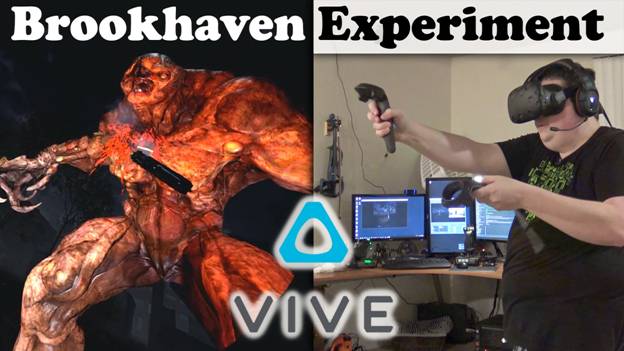
BROOKHAVEN EXPERIMENT 2016


When you go to consolidate together some noteworthy graphics or designs with some sort of horror Virtual Reality or VR games, at that time you acquire The Brookhaven Experiment.

The amusement is unnerving without anyone else, however, VR survival loathsomeness diversion may very well make you get your jeans as it pushes us into another age of computer game designs that encompass us.

The advancement of computer games is noteworthy when you consider the moderately brief time traverse since the main economically accessible computer game hit the market in 1972.

Our advance in creating computer game Animation is surprising, to such an extent that it helped reinforce very rich person Elon Musk, proprietor of Tesla, Solar City, and SpaceX, in his claim that we’re living in a reenactment.

The mind-boggling progress in photograph sensible impacts in such a short time span influences you to contemplate what people will have the capacity to create in the years ahead.

The blog is presented by the premier Animation–VFX institute in Kolkata, MAAC that also proffers quality education on Multimedia, Web, Graphics, Gaming and other architectural courses.

In order to know more click here and register.

Wednesday, 15 August 2018

Learn the Combination of 2D and 3D Motion Graphics

In this blog post, the blending of 2D and 3D Motion Graphics is explained with a view to acknowledging the pupil and the aspirants so that they can get an idea about the amalgamation of 2D and 3D Motion Graphics.


There’s such a great amount of mixing of styles going on now in the movement designs world, it’s difficult to stay aware of where the line is drawn in the vicinity of 2D and 3D Motion Graphics.

In this article, we’ll investigate the four fundamental classifications for this mixing of styles.

You may think about how this pattern was conceived.

While there is a considerable measure of contributing reasons, there are a couple that appears to be at the bleeding edge.

One being that specialists will dependably be pushed to concoct the following enormous look.


Two being that craftsmen are requested to accomplish increasingly consistently which requires a more extensive range of abilities.

Set up one and two together and we have a cross-fertilization of two universes intertwining into one major movement spectacle.

We see mixes of the film with 2D and 3D components composited in a wide range of emphasis.

Eventually, the lines start to obscure and it’s difficult to differentiate when you ask yourself, “How’d they do that?!”

For the purpose of this article, we should characterize that real to life film in 3D.

Implying that we live in a three-dimensional world and it is just 2D when we smooth it into the film. We can, in any case, still observe that the pictures have profundity.

How about we jump into the diverse kinds, and deconstruct a few strategies for accomplishing these looks.

Approach#1 Simple 2D Overlays


This is one of the most established and most normal types of mixing 2D and 3D movement illustrations.

The 2D picture is the level content or realistic which is just overlaid upon the live action or 3D film.

Some of the time you’ll see this style connected with approximately 2D following that will permit its position or potentially revolution to take after alongside a component in the shot.

This look is anything but difficult to accomplish in layer-based typesetter like After Effects.

Just place the 2D layer over the recording layer in the stacking request.

On the off chance that you’d like the 2D layer to take after alongside the 3D picture, essentially track an unmistakable component in the recording and apply the information to the 2D layer.

Approach #2: 2D Overlays with Match-Moving


This is a somewhat more included process for coordinating these kinds of 2D designs with the recording.

Typically these sorts of designs have more compositional importance to the shot since they should specifically collaborate with components as they move in the 3D.

It’s just in the last couple of variants of After Effects that one has could complete a 3D camera understand keeping in mind the end goal to incorporate illustrations with the 3D data of the shot.

Customarily, when a shot like this is composited in After Effects, you’ll see fundamentally 2D designs being utilized.

This is on the grounds that the material alternatives for After Effects 3D layers are as yet constrained contrasted with an entire 3D packages.


Paperman

Hence, we have seen a vast uptick in the 2D realistic mix into a completely 3D moving scene.

Actually, these designs are 2.5D on the grounds that if the camera were to take a gander at the picture from the side it would seem to have no profundity, similar to a bit of paper.

So the pictures have a 2D looking surface however 3D developments when working with the camera.

Approach #3: 2D Overlays as Draw-overs


With regards to movement illustrations, you’ll see this cell style liveliness either essentially super forced over a picture or you’ll see the component really connecting with the activity in the recording.

In the case above you can perceive how much arranging needed to go into the first shot to make it a win.

You should arrange for where your on-screen character will be so that the 2D pictures can legitimately interface when they are consolidated.

This kind of work process has a couple of ways it should be possible. One route is to encode your real to life film as an FLV and bring it into Flash to make the drawn-over impact.

The video must be FLV arrangement to be scrubbable in Flash, be that as it may, at the season of this article, After Effects CC 2014 and Adobe Media Encoder CC 2014 never again bolster the FLV or F4V positions.

A workaround for this is simply to utilize any past form. Another approach to accomplishing this look is to utilize ToonBoom.

It has a considerably less demanding import process for the video and you can without much of a stretch draw over the edges.

Whatever you pick (even be it Photoshop or pencil and paper) this look is a noteworthy pattern at the present time.

Amalgamation of 3D and 2D Images

This style is unified with numerous varieties and demonstrates the most obscuring of the line in the vicinity of 2D and 3D.

It’s generally accomplished in a 3D application with 3D models and Animation.

It’s finished however to get the lighting such that it has a level look.

This look is extremely present in the at present super-prevalent low-poly look.

To surface your 3D models to look all the more level in Autodesk Maya or Autodesk 3ds Max for instance, have a go at stopping the shading you’d jump at the chance to use into the luminance channel instead of the shading.

To go considerably compliment kill the specular channel.

In case you’re going for that low poly look and need those aspects to show up, have a go at erasing the Phong tag, This will lessen your smoothing and give you that low-poly, to some degree vector look.

These styles are well known, and they proceed to change and awe us with creative mixes of further mixing 2D and 3D Animation designs.

The more requests we see on specialists to be handymen, the more we will keep on seeing these half and half acknowledge of what Motion Graphics can be.

Are you looking to acquire adequate learning about Motion Graphics?

Then come to MAAC Kolkata which is devoted to quality training in various areas of Animation, Visual Effects, Multimedia, Graphics, Web and other architectural courses.

In order to have custom training in this fields, click here and register.

Sunday, 12 August 2018

The World Of Digital Painting Skills With Brushes

Then you have successfully landed your flight at the correct runway-MAAC Kolkata.

It is indeed exciting as well as motivating while painting some sort of jungle scene or a haunted house became a matter of utter interest, fun as well as engaging.


Digital Painting In Adobe Photoshop


Photoshop creates and generates raster paintings.

This type of paintings seems more pragmatic than a vector painting or illustrations as because this type of paintings generally bears a resemblance to a real painting made with real brushes as well as paint.

This painting can be created in Adobe Photoshop by utilizing brush tool in a spontaneous way.


A digital painting producer tries to imitate the physical questions or individuals in their own virtual way utilizing virtual brushes and hues.

Ventures to Make Digital Painting


Making an advanced painting isn’t a simple errand, however, there are different approaches to make it and with training, we can even build up our own particular one of a kind system.

To begin with, we first need to envision what precisely we need to make.

It’s constantly better to have an unpleasant design

Keeping the span of the page as a primary concern is likewise vital.

Start by making an unpleasant draw of your craft on the screen utilizing brush apparatus.

Nonetheless, Photoshop comes accumulated with a portion of the encouraging grass alongside leaf brushes, having the ability to make your own particular custom foliage brushes will help and outfit you with altogether more imaginative control at the season of painting a circumstance precisely.


Conceding that you’re occupied with the making of any sort of custom brush foliage in Adobe Photoshop the primary angle to consider in this matter is none other than shading or color.

In Adobe Photoshop, brushes are characterized as per the perspective of the grayscale information.

On one hand, when you can make a brush from a vivid picture, changing over it to grayscale will furnish you with a clearer way to take after while building your brush preset.

Essentially, any pixels that are 100% white will turn out to be completely straightforward and pixels that are 100% dark will turn out to be totally misty.

Estimations of dark in the middle of high contrast will differ in translucency.

Knowing this data regardless will help you in accomplishing the look and feel of your brush and how it makes an interpretation of outwardly to the canvas.

The second viewpoint to consider is the size constraints of your brush.

The present most extreme size constraints for a brush in Photoshop are 5,000 by 5,000 pixels.

So in a perfect world, the bigger you make the brush the better.

The purpose behind this is you can’t build the distance across of your brush past the first size in which it was made without it seeming hazy.


Comprehend logically with the patterns

With regards to creating a brush for painting leaves, grass, bark, greenery along with distinct types of foliage, you will doubtlessly require thinking and game arrangement of any pictures or examples that you utilize.

Assuming that you’re going to outline a leaf brush that will, in turn, dissipate leaves when you paint, at that point the arrangement of the leaf pattern or design for your brush preset will represent the moment of truth the visual look of the scattered leaves that are connected to your canvas.


Suppose you have a few pictures of leaves that incorporate their stems.

By masterminding every one of the leaves with their stems pointing internally amid the formation of the brush preset will yield you better visual outcomes.

Along these lines, you won’t have arbitrary stems standing out wherever when you disseminate the leaves amid your work of art process.

By having the example orchestrated with the stems pointing internal, you can make the hallucination that the majority of the leaves are naturally associated with a similar assemblage of foliage instead of resembling being heaped on or stuck together.

In case you’re planning a brush preset to paint grass, being aware of how the grass will be scattered over your canvas is likewise essential.

Take a stab at drawing singular pieces of sod that differ long and width for your brush preset.

This will give you an outcome that doesn’t feel outwardly tedious or stamped out.

Also, making an assortment of grass brushes that all contrast in such manner will permit you to paint a ground territory that feels characteristic and more natural.

Adjust Your Brushes


When you have nailed down the outline of your custom foliage brush, you can start to plunge into the brush board and modify settings on how you might want the brush to be connected to your canvas when painting.

This is the place you can change the dissipating, shape, shading elements thus substantially more.

Investigate diverse settings to perceive how your foliage configuration can be connected when painting.


Once you’ve characterized the usefulness of your brush preset you can spare it out from the brush board for later use on tasks of your picking.

Eventually, it’s how much you utilize these kinds of brushes that will decide the nature of your work.

Custom foliage brushes can be a successful expansion of your advanced toolkit with regards to fleshing out conditions that call for solid nature components.

By joining them alongside a portion of the fundamental default brushes that come supplied with Photoshop you’ll have the capacity to make quality work that has that added touch of detail and clean.

This blog post is presented by MAAC Rashbehari, MAAC Chowringhee and MAAC Ultadanga centers of Maya Academy of Advanced Cinematics.

We believe that this blog is helpful to you keeping in mind the fact that beginners and aspirants of Photoshop are kept acknowledged about the various aspects of digital painting.

Digital painting can be defined as the procedure of doing an art on a system.

Digital Painting is a method which is utilized to portray our concepts as well as thoughts on the screen by means of adapting conventional painting mediums such as the ink, oil, watercolor and many more.

To know more of this click here and register.

Thursday, 9 August 2018

The Way CGI Changed the Movies of Generation


The film is so much that the intensity of the focus that there always needs to be some tension and some forward motion.

For the vast majority of people, a trip to the realm of movies is more than just diving into a world of entertainment and a couple of hours of idealism.

Whatever may be the case, have you at any point of time halted to ponder what goes into making some of our most loved scenes.

The scenes that have compelled us to the edge of the seats, that gave goosebumps to drops of sweat holing up behind our hands or fast crying are indeed outstanding.


Computer-generated imagery is utilized to carefully make Animation and Visual Effects in the film as well as in TV.

This is done by keeping in mind that everything began with conventional Animation and later innovation has seen artists drop their pens and swing to their screens.

Computer-generated imagery or CGI has without a doubt changed the entire realm of the silver screen.


The CGI potential has unfurled as the bridge amongst Animation and live-action movies got littler al0ong with the blending of imagination and reality relatively consistent.

But have you ever wondered what makes the CGI so superior and user-friendly?

Is it at all unrivaled?

A few people say that CGI had in the past gone through the golden days.

Some other critics are of the opinion that others, just as enterprises or industries did, addressed whether performers would be supplanted by photographing perfect animated renditions of themselves.


Numerous performing artists are inspired by CGI’s capacity to turn around time, highlighting them as youthful and sans wrinkle.

Envision how fruitful half and half CGI/PC helped plastic surgery would be.

All things considered, both CGI and one-stop activity (utilizing plasticine characters like Wallace and Gromit) convey astonishing outcomes.

Possibly that is the eventual fate of CGI.


Competition with Animation

In order to draw that there was a rivalry phase between the enlivened Animation and the computer-generated imagery, we have to rewind and see how w got to where we are.

It is like when there was a tremendous civil argument among the photographers regarding whether the digital world would truly ever assume control over the film.

What’s more, it was intensely wrangled about, no-nonsense fans declining to acknowledge that computerized was the path forward, that it is ready to convey similar outcomes or better, in a small amount of the time and cost.

Photography had seen few changes since 1826.

We know how that worked out. Until CGI, stop-movement ruled, it had no genuine adversaries.


The Age of Beginning of CGI

With the advancement and the development of the Phenakistoscope and the Zoëtrope during the 1800s, attractive drawn images were enlivened, as they were both promoted as toys by means of fast progression.

This was the stage when Animation was in its infancy.

But the fact of that time has Animation had no story until 70 years the fact when the main films opened their entryways.

Other than illustrations, different characters as manikins had been engaging individuals for a long time, so utilizing them in action was a characteristic movement.

It required ability and a considerable measure of persistence to move protests a portion at any given moment, however, the aftereffects of stop-motion had groups of onlookers enthralled, it commanded for about a century.

With signs of progress in modernized innovation, CGI was inescapable.

Not at all like the present fine cases, such as viewing the embellishments in the principal part of Jaws film, early CGI was recoil commendable.

Then, conventional strategies like stop-motion had progressed into 3D and 2D cell-based Animation, they won fans all over the place, generally kids.

Movements likewise attempted to rival Hollywood blockbusters loaded with appealing A-listers.

Do you remember Tim Burton’s The Nightmare Before Christmas was a leap forward for stop-motion and looked organized to remodel the film business?

Subsequently, after two long years, Pixar released The Toy Story in the year 1995.

Primarily, it was the first full-length CGI film made and everything changed after that.

Indeed, even Spielberg discarded stop-motion for CGI for Jurassic Park after just expecting to utilize it to make the rush; CGI’s efficient, cash sparing shocking impacts too great to overlook.

However, stop-movement remained a most loved with illustrators, for example, Aardman, makers of hit highlights Wallace and Gromit and Chicken Run.

They just made their first vivified computer animated film in 2006, Flushed Away.

In 1993 we saw a mystical crossroads in PC created film history – we saw our first dinosaur.

Jurassic Park was the principal ‘physically-finished’ CGI film, which means those dinosaurs showed up unbelievably practical on screen.

In any case, it didn’t occur without any forethought.


The group from visual impacts house ILM started with drawn outlines and prosthetics of the dinosaurs previously checking them into a PC.

The Animation programming software was utilized to pinpoint and control hand and feet developments before the surface of the dinosaurs’ skin was painted on.

Once these different pictures were pulled together, the dinosaurs were put into a scene and joined with live-action and area shooting.


CGI that Made Entire Movies

Even at the end of the late 1990s, CGI was utilized sparingly.

But during 1995 Toy Story turned into the main full-length CG highlight.

With just a little group of artists our most loved characters, from Woody to Buzz Lightyear, became animated.


Until the late 1990s CGI was utilized sparingly, however in 1995 Toy Story turned into the main full-length CG highlight.

With just a little group of artists, our most loved characters, from Woody to Buzz Lightyear, became animated.

Pixar took after this leap forward venture with a plenty of CG Animations, for example, Monsters Inc., Finding Nemo and the Toy Story continuations, the most recent in 3D.

CGI that Reproduced Scenes from History

CGI has gone to a stage where it had progressed into the thousand years.

CGI achieved new statures as professionals begun to utilize computer illustrations in live-action films in order to reproduce true events.

During the year of 2001, viewers viewed the Japanese assault on a US maritime base in Pearl Harbor.

The assault was recorded utilizing two shots of the USS Arizona and a modest bunch of visual impacts to show the grouping, make body reenactments and embed smoke tufts.

CGI that Caught Individuals

With the rolling in of the 2000’s, audiences were surprised and awed once again when a completely rendered CG character showed up on screen.

Have you heard about Motion capture or Mo-cap?

Motion capture is a strand of CGI that crawled into the standard cinema with at an amazing pace.

Motion capture took into account the chronicle of movements created by objects or mass people.

In Peter Jackson’s 2001 film, Lord of the Rings, Gollum was the primary movement caught character to encounter different performing artists.

Conventional Animation was joined with computerized reasoning programming to supplant performing artist Andy Serkis’ developments with those of Gollum’s.


CGI’s Subsequent Stages

In terms of Hollywood, the most recent CGI motion picture is the creation of the waves and also for the purpose of the correct reasons.

Crowds of people are reckoning the arrival of Jon Favreau’s remake of the great movie- The Jungle Book, hailed as a CGI-substantial adventure.

The film mixes live-action with conditions and photorealistic creatures made completely utilizing CGI, which means no live creatures were utilized as a part of the motion picture.


Has CGI crested?

The latest decade has seen the CGI go from quality to quality- a gradual uprising engaging the two grown-ups and youngsters.

Today’s dominating cinemas films and changing the universe of gaming, it’s been a standout amongst the most discussed innovations to date.

Everything comes down to one basic certainty: individuals pay to be engaged.

We know how great CGI is the point at which it’s done well, however at the center dependably should be a decent storyline.


Trustworthy characters we can identify with, sympathize with or detest.

Similarly, as terrible composition occupies the peruser from the story, over-the-top or implausible CGI ensures walk-outs at the silver screen.

Also, as human instinct goes, individuals dependably need better, more. It doesn’t look like CGI has crested fundamentally.

Dissimilar to innovations which have been and gone in its lifetime, CGI is enhancing constantly.

Think about the bleeding edge advances and systems utilized for the Disney Moana motion picture which is pushing the limits of what is conceivable.

With respect to CGI marking conventional Animations’ passing warrant, possibly not exactly. Like every new thing, CGI was a curiosity.

Click Here To Know our programs.