Showing posts with label best vfx institute in kolkata. Show all posts

Monday, 30 October 2017

USE OF VFX BEHIND THE SCENES OF RAEES MOVIE


In our today’s blog we will discuss the use of VFX in Raees, the movie released on 25th of January this year, is yet another movie that entered the 100 crore club, in it’s opening weekend.

The movie directed by Rahul Dholakia, starred Shahrukh Khan, Mahira Khan and Nawazuddin Siddiqui, in prime roles.

The film is produced under the banner of Red Chillies Entertainment and Excel Entertainment Pvt. Ltd., and co-produced by Gauri Khan, Farhan Akhtar and Ritesh Sidhwani.


The movie involves a story of a liquor smuggler named Raees ( played by Shahrukh Khan).

The story revolves around Gujarat, where there is a prohibition of liquor trade. Raees used to work for racketeer Jairaj, from a very young age, along with his friend Sadiq.

After years of loyalty towards Jairaj, Raees decides to part ways and start his own liquor smuggling trade, with the help of Sadiq. Raees was able to build his own empire in the crime world, with his sheer intelligence.

But his crime records came to the notice of an honest police officer, J.A Majumder, and that’s when the cat and mouse chase starts between Raees and Majumder, with a hint of thrill and pure entertainment.

Mahira Khan plays the love interest of Raees and supports him in every possible way.


The story is a pure form of Bollywood full-packed entertainer with action, thrill, romance, item number and a plot revolving around a gangster as the protagonist.

The item song “Laila main laila” featuring Sunny Leone was captivating foe her immensely graceful performance and also for the thrilling action sequence in the backdrop.

The film was critically acclaimed from getting good to average reviews. But that definitely didn’t affect the box-office collection.

Now talking about the making, the movie is set in the 80’s and 90’s background.

The major portion of the movie was shot in Mumbai, where the sets were designed to recreate the slums of Ahmedabad.

The main reason for not shooting in Gujarat was the immense crowd that would gather around to watch Shahrukh Khan.

Around 400 VFX artists worked on the development of the film and took about 6 months to accomplish the task.


The Red Chillies Entertainment is unquestionably one of the best VFX company and production house, and we can witness the minutely perfect work of special effects in successful films like Ra. One, Om Shanti Om, Krrish 3 and many more.

The dedication of the artists and the well constructed concepts ensures good quality pf output.

The company can be seen pushing itself to create the best and be innovative with every new project.

Precisely, we can say their work ensures our eyes are glued to the screen and make us believe everything we are watching are real.

Shahrukh Khan was seen donning a typical Muslim man look with Kohl in his eyes and an amulet (taveez).

But there was a scene of a “Ratha Yatra”, where the whole sequence was shot without the amulet.

VFX supervisor Ronak Sanghadia was given the tiny but tedious task of incorporating the amulet in the whole sequence, where Shahrukh Khan is seen fighting and chasing towards a chariot.

According to Sanghadia, the task was challenging as they had to put the amulet in 50 shots. A lot of simulation was done.

CGI, background preparation and compositing was carried out. Every movement of the amulet was matched with Shahrukh’s movements.

The sequence was small but a lot of detailing was done to bring about the perfection, so that it looked natural.


As the plot involved a background of 80’s and 90’s, so modern day structures like tall buildings, mobile towers etc were removed to match the concept and bring about realism in the film.

The color grading also needed to be at par with that era.

The location of the plot being Gujarat, was kept in mind to decide the principal color palette. Ashirwad Hadkar, colorist of Prime Focus, visited the sets a lot of time, to study the scenes and it’s environment.

There was around four sequences where major work of VFX was required. The kite flying scene, was actually shot in Mumbai.

Due to the high popularity of the Makar Sankranti festival and huge crowd that decision was taken.

Later by incorporating VFX, the whole environment was recreated and transformed to look like the scenes have been shot in Gujarat and there was an actual kite flying festival going.

The Research and Development team went to Gujarat and studied the environment.


The actors were actually shot in an empty sky with a chroma screen behind. The set designer ensured the sets looked natural and perfect.

There were several other scenes, which were recreated using CGI. Like, in the beginning, Shahrukh was seen riding a bike through a bridge of Gujarat.

Though the bridge was used massively back in the 90’s, in the present time, it is inaccessible.

So the VFX team had to recreate the bridge and add it to the sequence, with minute detailing.


In a scene where Raees was seen smuggling liquor through waterways by boats to fool the cops who were waiting in highways and check posts- was done using CGI.


For the scene only 5 boats were shot and other boats were added using CGI. The actual sequence was shot in Uran, a fishing village in Navi Mumbai.

In terms of post production, all the shots in the movie were blended seamlessly.

The application of VFX looked natural and realistic, and attracted the viewers largely.

The color grading was done perfectly. Apart from the VFX, the stunts performed by Shahrukh Khan, without wearing a harness, garnered appreciation from all.

Despite his shoulder pain due to the injury happened in the sets of Billu, he did his own stunts. During the “Laila” song, Shahrukh was seen flying and firing, simultaneously.

The stunts were supervised by action coordinator Ravi Verma. Shahrukh was seen thanking Ravi Verma and cinematographer K.U Mohanan, for the whole sequence.

Shahrukh Khan’s portrayal of an anti-social liquor dealer was really convincing.

The realistic acting of Nawazuddin Siddiqui was also appreciable.

The R&D team’s thorough research, the creativity and detailing added by the VFX team, the realistic sets and sheer hard work of all the crew, made it possible for Raees to win our hearts.

In terms of CGI, VFX and Color grading, this movie has literally raised the standard of technicalities in Bollywood.

Thursday, 7 September 2017

BEHIND THE SCENE VFX USED IN THE MOVIE FAN

Hi guys!! In today’s blog we are going to discuss about the movie FAN. Although the movie was not a blockbuster hit like expected but the techniques employed in this movie was amazing and was accompanied with a lot of surprising VFX.


The movie FAN was directed by the renowned director cum producer MANEESH SHARMA and produced by ADITYA CHOPRA under YASH RAJ FILMS production house.

To begin with let us first know the jist of the movie.

The story revolves around the main protagonist slash antagonist Gaurav Chandana (played by Shah Rukh Khan) a die-hard and obsessive fan of Bollywood superstar Aryan Khanna (also played by Shah Rukh Khan) and how he (Gaurav) unexpectedly tries to seek revenge against Aryan for turning his fan away.

For all we know the rest of the story is quite known and well-discussed in media already.

The main question that arises in this occasion is that how is the movie unique?

The answer to such a mind boggling question is the use VFX or VISUAL EFFECTS in the movie.


The effects used in this movie were so hardy and difficult to achieve that despite the prolonged attempts great film makers of Hollywood couldn’t accomplish it.

The VFX used in the movie was handled and monitored by SRK’s company Redchillies.

VFX along with the aid of a renowned VFX artist Harry Hingorani as its supervisor.

The Redchillies VFX used a one of its kind life sized 3D printed model (of SRK himself) to create a younger paradigm, SRK.


Apart from making SRK look younger and smaller accompanied with certain changes associated with the facial feature, VFX was also used in few chase and action sequences in the film.

Prior to the profuse application of VFX the main challenge for the cast and crew was to make SRK look younger for his role as Gaurav.

Maneesh stated that even the greatest VFX artist across the globe thought that it was not possible as Gaurav’s face should look similar to that of Aryan and yet different and younger.

But VFX producer Keitan Yadav believed that with the help of a mixed composition of prosthetics and computer-generated effects (special effects and VFX) the desired looks could be more plausible and achievable.

And thus Greg Cannon the make-up artist accepted one of the most challenging aspects of the movie-making process.

He said that the task sounded amusing but he was shocked by the number of days it took him to complete the task and make SRK look younger.

It took him a total of 70 days to complete the task whereas usually such tasks are attained within 10 days.

This one particular task demanded so much of their time due to the chubby cheeks required.

Therefore he began working with different moulds for different facial features as promised.

Yet he was not able to achieve the young look that was anticipated, as it was quite feasible to make someone look old but in contrast it was really difficult to make someone look young with such an enormous age gap.


He had to give Gaurav well toned and chubby cheeks. But after trying hard enough, one day Greg was wondering, while in his office, and discovered the mould of Brad Pitt.

He saw that he had an unusual cheek and jaw structure.

Therefore he endeavored to give Gaurav, Brad’s facial built which turned out to be successful. Therefore finally after 70 days of hard work he successfully achieved his goal.

But this was not only it. Greg and SRK along with the rest of the makeup crew had to patiently sit for 5 to 6 hours daily just in order to apply prosthetics and silicon on SRK’s face which would make him look younger.

They had to tape SRK eye lids and cheeks upside to give them shape.

They used plums to push SRK’s upper jaw up.

They used little eye brow pieces to make it look thicker. Then finally after immense hard work the look was successfully established.


Finally, after the completion of all the shorts the VFX artists initiated their work.

Firstly they all had to make Gaurav’s nose appear smaller than that of Aryan’s.

Then, they had to fill up the parts in between prosthetics and silicon. They also had to make the facial tone smoother and even.

Followed by this they had to enhance the gap between the nose and upper lip.

Then they had to make Gaurav’s eyes beseem bigger and move the jaw line slightly up.


Finally removal of the difference between prosthetics and the real skin was to take place.

Then the expressions were to be changed and the lips were to be adjusted accordingly.

After all the VFX used in face customization of his other physical features was started. For instance they had to remove Adams apple and muscles behind neck.

Then they had to shrink Gaurav’s build by narrowing and straightening his shoulders, and removing the muscles.

Due to the changes brought up in his body they had to perform several body scans.

To make correct and absolute measurements for Gaurav’s body scanning they were to be done while SRK was trying Gaurav’s costumes.

VFX was also used to achieve certain emotions on Gaurav’s face as an impact of too much makeup.

Apart from all these VFX was also used in action scenes.

The most seemingly unattainable part in the entire movie making was achieving a smaller nose.


The amazing fact about this movie is also that the concept about the film was first narrated by late Yash Chopra to SRK about 12 years ago but the filming didn’t happen then.

But finally after all the long waited ups and downs the film was completed and was finally released on 15th April 2016.

It goes without saying, as the VFX and Animation Industry is blooming in today’s world, and is needed in each and every place along with the unimaginable applications of VFX, it’s highly recommended to learn about it.


Join MAAC KOLKATA today. The place where you will be trained to become your best version and guided to know that the only limits is your imagination, and will assist you to achieve your goal and turn what everyone says “impossible” into “possible”.


Thursday, 24 August 2017

How Maac Kolkata Helps Its Students To Crack Down Animation OR VFX Job Interview

Preparing for a job interview is very essential. Today we will discuss few more tips only at Maac Kolkata to crack animation or vfx interview.

You need to be fully prepared to get recruited. Interviews have been a nerve wrecking situation.


It isn’t that easy to impress and secure the dream job.

Nervousness, has it’s own place, among the candidates.

YOU NEED TO OVERCOME IT AND GIVE YOUR BEST.

Preparing yourself for the interviews requires a lot of efforts, both for the fresher’s and the experienced ones.

Ease out your stress and prepare yourself for the interview.

Keep it in mind, there are many other people applying for the same job you have applied for.

So you need to control your nerves and DON’T PANIC, rather be chilled and confident.


If you are aspiring a career in Animation or visual effects and want to soar high in this field, you surely need world class training by experts, which you will get undoubtedly in Maya Academy of Advanced Cinematics – Maac Kolkata.


You need to enhance your creative talent and prepare yourself mentally to get what you deserve.

Maac Kolkata helps its students to prepare themselves for their future and also prepares them for all type of challenges they need to face in their career.

Facing an interview and cracking it is the first challenge for which the students are prepared during their course.

VFX and Animation industry is a blooming one. The demand for visual effects and other type of cinematic effects has increased greatly.

This increase in demand is a good news as more and more artists are being hired and getting their deserved recognition in this field.

If you are really talented and have the required skills then you have the chance to show off the world your ability.

Here, interview is the way to judge or analyse your skills as claimed by you in your resume and showreel.

There are few techniques you should follow and a few things you show keep in mind for securing your dream job in this world of Animation and VFX.

SHOWREEL


The first and foremost thing, based on which you are called for the interview, is your showreel.

For an animator or a VFX artist it is very important to prepare a good showreel containing your best works.

What a CV is to the people of other fields, a showreel is to the animators and VFX artists.

It is the first thing on the basis of which you are judged. A short yet impactful showreel is what you must prepare to impress your employer.

A carefully edited video with a subtle music and obviously, comprising your best works are the things you need to make your showreel worthy to be selected.

Please, make sure, you do not mess up your showreel, by adding works which are not required for the job you are applying for.

If you are applying for a job of Matte Painter, there is no need to add motion graphics work, instead focus on creating magnificent matte paintings and add them in your showreel.

INTROSPECTION


You should think and take your time beforehand, to introspect.

You must know you key skills. You must know your area of excellence and should know your forte.

Obviously, you can do many things but you have to focus on your specialised skill and work out on that. From a diverse range of aspects, like Modelling and Texturing, Lighting, Compositing, Animation, Matte Painting, Tracking, Rigging, etc, you need to choose one.

In a production house there are different departments and each department is expected to give their best output.

So you need to prepare yourself in that way. Suppose you are very good in Modelling and Texturing, prepare yourself to become the best 3d artist.

If you belong to Maac Kolkata, you need not worry about choosing your specialisation, as they know it best and know how to bring it out in an individual seeking a career in this field.

UNDERSTANDING THE JOB


People have the necessity to secure a job and establish themselves.

But do not apply for a job randomly, just because you need one. You need to be very clear about the job you are applying for.

Do some basic homework and research about the job.

Suppose you are very good in motion graphics, go for that job, and do not opt for any other specialisation, as you won’t be able to give your best in that.

Also you need to understand the requirements.

As an animator or a VFX artist you need to be very fluent in every software, that is required in that specific area.

If you are applying for the job of animator, you must possess good knowledge of the Animation Principle; Aesthetic n software’s required in it, like AutoDesk Maya, AutoDesk Max etc. You need to work harder and polish your skills.

You need to have enough knowledge so that when you are asked about it, you can answer promptly.

Also keep yourself updated with the changing needs and requirements so that you never seem backdated to your employer.

As a student of Maac Kolkata, you get the opportunity to understand the job requirements better as you get the opportunity to interact with highly professional faculty and industry experts.

ETHICS


You need to be honest about your skills and achievements to your prospective employer.

In the interview do not boast about your skills. You should not seem over confident or know-it-all, as it would only put a bad impression on your interviewer.

Always answer back politely. And never ever start a heated argument with the interviewer.

They may say things of different opinion and wait to see your reaction, so it might be their tactics to see how you handle your seniors and how much you are capable of working under them.

“Smile, give a firm handshake and stay calm.” Remind yourself to give a firm handshake and a big smile.

A smile will boost your happiness and show your eagerness. Also, remind yourself to make solid eye contact with the interviewer.

All of these body language cues will lead the interviewer to see you as a more approachable candidate.

SALARY


In the interview, when you are asked about your salary expectations, don’t say a random amount.

You should do a research of salary expectations for the post you are applying for.

Saying a weird value on being asked your salary expectations will let the interviewer doubt your knowledge about this field.

Try to do a thorough research in the internet and also you may ask people from the field to provide their knowledge of salary expectations.

FEAR


It is very obvious to get nervous in the interview process.

Everyone knows how difficult it is to get selected. It is really a hard thing to have the ability to impress others.

You might be very talented in your field but the FEAR would be a great hindrance in the path of you securing a job.

The fear of getting rejected or facing the interviewers is a major drawback. You must know to overcome it.

As an animator you might possess required skill and knowledge but lack of confidence in yourself and having the fear of rejection wouldn’t be good for you.

Try to handle stress in a calm way. Do not get panicked.

Just chill and focus on your skills. Have faith in yourself and believe your ability.

Noteworthy, the faculty of Maac Kolkata knows how to help you to overcome your fear.

They will help you to boost your confidence with thorough counselling.

Appraisals and recognition’s are the things you need to overcome your lack of confidence, which you will get in Maac Kolkata.

They leave no stone upturned to inspire you and motivate you and help you build your career.

Now that you have got some good tips, gear up for your career and be confident enough to crack the interview with ease.

“I can do this” are the words that will boost your confidence.

The last thing you want to do is go into the interview already thinking you’re not going to get the job.

Never set yourself up for a loss when you can always set yourself up for success.

Don’t think of the interview as the top of the mountain.

Instead, think of it as a stepping stone on your way to the top. This will ease off some of the pressure you may be feeling.

Think beyond the interview and look at your future.

How is this interview helping you get to where you want to be?

Go ahead and give your best in the interview.

BEST OF LUCK!

Thursday, 17 August 2017

USE Of MINDBLOWING AFTER EFFECTS IN STAR WARS

In our blog today we will be discussing the mind blowing After Effects done in star wars.

Star Wars is a renowned film franchise begun by the American director George Lucas with his 1977 film of the same name.

At the time, the film became the highest-grossing in the world (and remains among the highest grosser today as well) and proved to be a landmark in terms of the stunning imagery and effects put to use.

Following the critical and commercial success of the 1977 film, there have been seven more releases (marketed as a prequel trilogy, the original trilogy, and a continuation sequel trilogy), with the eighth and ninth film in the series slated for release in the coming years.

In addition, there are several spin-off films, books, video games, comics and other media and merchandise that have established the series as an icon of popular culture.


Coming to the heart of the matter, the series is an epic space opera involving intergalactic struggles between forces of good and evil.

There are alien planets and creatures abound, as well as futuristic technology and weaponry.

Naturally, visual effects and computer generated imagery have been invaluable additions to the production process over the years, Industrial Light and Magic (ILM) has handled the visual augmentation for all the films since the beginning.

Motion graphics and rotoscopy in particular have been made simpler with digital support through software such as Adobe After Effects.


After Effects is a powerful layer-based visual effects, compositing and motion graphics tool, which is commonly used in film and television in the post-production pipeline.

It can be used for chroma keying, motion tracking, compositing as well as animation, and serves as a basic non-linear audio-visual editor and media transcoder (or in layman’s terms, converter).

It has played a role in the post-production of films like Sin City, Iron Man, and Stranger Than Fiction, and is far more widely used to create introduction title and closing credit sequences due to its very capable motion graphics creation tools.

It is also used in animation films, advertising industry and television industry.

In our discussion today, we will focus on two aspects of the Star Wars films: the introductory title sequence, and weapon effects.

Star Wars Title Crawl:

The introduction sequence of the Star Wars films is one of the most recognisable elements of the franchise.

It features three parts: a static slide with the text ‘A long time ago in a galaxy far, far away…’ in blue, followed by the stylised words ‘STAR WARS’ shrinking into the frame against a star field background, which is followed by the episode number and subtitle and a (typically three paragraph) passage that delves into the back-story for the film in a prologue format.

This text crawls through the screen in a perspective view rather than the more common frontal view.

After this text crawls out of the frame, the camera tilts downwards and the film begins.

The initial release of the first film did not include the episode number, but subsequent films and the re-release did.

For the original trilogy (1977-1983), this title sequence was filmed using huge 2ft x 6ft models with the camera painstakingly manoeuvred to capture the scrolling effect smoothly.

The prequel trilogy (1999-2005) made use of computer generated text and imagery to achieve the same effect, making the process faster and much easier to control and modify if needed.

The original format of the title crawl was preserved, however. In subsequent years, the original films, too, were re-released with a digital version of the introductory title crawl.

The ongoing sequel trilogy, which began with the release of Star Wars: The Force Awakens in 2015, has the title crawl designed digitally like the prequel trilogy.

Weapon effects:

There are two weapons that we see throughout the series: lightsabers, and blasters.

The lightsaber, as the name suggests, is a sword-like weapon that consists of a plasma blade powered by a kyber crystal, which was emitted as a beam of light from the hilt (usually constructed out of metal or a specific type of wood).

It is used primarily by Jedis and Siths, who are users of the Force (a mystical energy form in the films) and requires a great deal of training and skill to be handled properly.

They are of different kinds, most commonly single-bladed, but also double bladed like a staff, and these blades have different colours depending on the affiliation of the user.

Blasters are more common; they are gun-like devices that fire bullets of plasma, and are typically used by the Stormtroopers, mercenaries and rebels who do not have access to the Force.


During shooting, for the original trilogy, white blades were used.

These were subsequently rotoscoped by hand and a glow and colour was added to make them distinctive: blue and green for the Jedi, and red for the Sith.

In the prequel trilogy in the later 1990s, this design process was done digitally.

With the addition of a new character in Mace Windu (played by Samuel L. Jackson), we even find a new colour of lightsaber, purple.

Software like After Effects made the rotoscopy process faster and less cumbersome than the older manual technique, allowing for creative expansion of the mythos of the series.

Lightsabers have also been seen in white and (rarer) black across other media in the franchise.

Blasters are considered more generic weapons, and they fire bullets that resemble white streaks of laser light.

These bullet fires, too, are now created digitally and added to the live action during the compositing process.

This serves not only for faster and cost-effective production, but also reduces any potential risk of actors getting injured by malfunctioning props.


These are just a few examples of the creative power of After Effects.

If you want to learn for yourself how it can be used to create these wonderful and cool effects, do stop by your nearest Maac Kolkata centre and enrol yourself for free class and amazing career options.

For all you know, you could end up working for upcoming films in the Star Wars franchise!

Thursday, 27 July 2017

Use Of VFX In War Scenes In Movies

A war film is concerned with warfare of all kinds, from naval to air to land battles, with combat scenes central to the drama. How was that possible to shoot in real life without some techniques, so their came the role of VFX.

Themes explored include combat, survival and escape, sacrifice, the futility and inhumanity of battle, the effects of war on society, and the moral and human issues raised by war.

The stories told may be fiction, historical drama, or biographical with plots exploring action and even wartime romance.

The Battleship Potemkin (1925) is among the most well-known of the early war films.


The genre is not tightly defined and its definition varies widely depending upon people’s personal perception of it.

A study of the most celebrated war films, however, reveals one important common trait: realism.

Films like Saving Private Ryan, Black Hawk Down, The Hurt Locker, Lakshya, Madras Café are among the most loved war films from India and the world, and they all give us an unflinching portrait of the violence and bloodshed, hard decisions, and tension that characterize any war.

The popularity of war films progressively increased in the 20th century and the World Wars became the most popular subject.

After the World Wars and Nazi themes, it was the Vietnam War in the 1970s.

In India, there were films made about gaining independence from the British or ongoing the tussles with our neighboring countries like Pakistan or Sri Lanka.

With changing times, cinema evolved and so did the cinematic techniques.

Technical excellence became a necessity in film production with the advent of modern technology, and this trend hasn’t changed to this day.

VFX is extensively used in films, and the war film provides an ideal platform through its need for realism of action.

In addition to creating environments or adding effects such as explosions, many war films also need crowd simulations as it’s simply not feasible to recruit thousands upon thousands of actors to play extra roles.

As far as foreign films are concerned, 2006 saw the release of an iconic war film, 300. Based on a 1998 comic series by Frank Miller and Lynn Varley, it depicts a fictionalized retelling of the Battle of Thermopylae within the Persian Wars.

Two months of pre-production were required to create animatronics animals, and the hundreds of shields, spears, and swords, some of which were recycled from movies like Troy.

The actors trained alongside the stuntmen, and even Snyder joined in.

Over 600 costumes were created for the film, along with extensive prosthetics for various characters and the corpses of Persian soldiers.

Only one scene, in which horses travel across the countryside, was shot outdoors.

It was filmed mostly against a blue screen, to help replicate the imagery of the original comic book: environments were digitally created, and the actors painstakingly composited into the scenes to reproduce the stylised picturisation of Ancient Greece.

The film has gained a solid place in international film as a unique war movie.


A discussion on technically accomplished war scenes in movies is incomplete without mention of James Cameron’s Avatar.

Released in 2009, the film portrays an epic struggle of the Na’vi to reclaim their home planet Pandora from the citizens of Earth, who are seeking to mine the precious element Unobtanium.

Cameron waited over a decade to see the film realised, and not without reason.

Most of the movie is shot after gorgeous shot of Pandora and the Na’vi.

The planet, its blue-skinned natives, and its black-skinned beasts were digitally created and animated with the aid of motion capture from actors.

The climactic battle scene is worth mention: as human machines mow down glowing trees to get closer to the Unobtanium mine, our hero Jake Sully, in Avatar form, takes control of the King of the Skies – Toruk – to turn the tide of the battle.

The scenes of the Na’vi praying as one at the mother tree while the battle is afoot are equally breathtaking.


Other notable Hollywood films featuring memorable war scenes are The Last Samurai by Edward Zwick, Hacksaw Ridge by Mel Gibson, Fury by David Ayer, and Apocalypse Now by Francis Ford Coppola.


Indian film, too, has its fair share of war films and use of VFX in it. Ashutosh Gowariker’s Jodhaa Akbar (2008) and Sanjay Leela Bhansali’s Bajirao Mastani (2015) are recent notable examples of films with a fair share of visual effects augmentation to portray battles and wars onscreen.

Both (especially Bajirao Mastani) featured extensive use of crowd simulation techniques to reproduce the huge armies that were taken to battle in those days where VFX plays an quite important role..


This is typically done for the long shots that establish the battle, as relatively lower poly models can be used along with image based rendering to get a good and realistic output without the need for thousands upon thousands of actors.

Chroma and staged sets were also employed to recreate the environments of the Mughal and Maratha empires in the respective films.

For Jodhaa Akbar, Gowariker tried to use traditional film techniques as far as possible; he hired around five thousand extras, and several hundred animals to reduce the pressure on the post production team. Bajirao, however, was a different story and VFX involved.


It relied heavily on VFX for the environments, and NY Vfxwalla  did a large part of the effects work for the film – including the war scenes, as well as the final climactic hallucination sequence of Peshwa Bajirao.

More recently, the Baahubali duology of films (2015-2017) by S. S. Rajamouli has some notable war scenes that boast of technical accomplishment.

From crowd simulation to environments and weaponry, it has it all. You can read more about Baahubali in earlier posts on our blog. Rangoon (2017) and The Ghazi Attack (2017) are more examples of Indian war films.

The former is set amidst the Indo-Burmese tensions during World War II, while the latter depicts the attack on the Pakistani submarine PNS Ghazi off the coast of Vishakhapatnam during the war of 1971. On a global level, Christopher Nolan’s Dunkirk is a highly anticipated war film releasing this month.

The film features extensive use of practical effects, augmented with VFX by Double Negative.

If you are more the doing kind, walk in to your nearest MAAC Kolkata centre and start your journey to explore firsthand the techniques used to make these war films come to life.

So creative hearted people still thinking what to do?

We are just a call away. Our helpline number 9836321595.

Tuesday, 16 May 2017

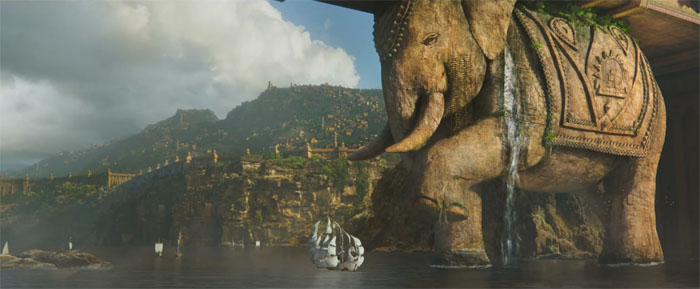
Baahubali 2: The Conclusion VFX Work Behind The Scene

Baahubali: The Beginning which was released in 2015 and from then ever since, the audience has been waiting eagerly for its second part, Baahubali 2: The Conclusion. In our today’s blog we will discuss the amount of VFX or visual effect the film has incurred and its behind the scene activity.

While the first part was definitely epic as well as superb entertaining, but at the same time we have ‘Baahubali 2: The Conclusion’ taking the excitement of the audience to the level next.

Those who have seen the movie have been waiting keenly to find an answer to the life changing question – Why did Kattappa kill Baahubali?


While the world waits to know the answer with the sequel finally got released and we all got our answers too. But with addition to the answer the audience has got much much more.

The whole film industry is in awe of the film and its every frame that is no less than a visual masterpiece.

It is the first Indian movie to be released in 4K High-Definition format, so the audience got to see crystal-clear graphics that has left the viewers stunned and experiencing new flavour of Indian Cinema.

It has proved to be the most expensive movie series in India, and a large part of the budget has gone into the visual effects, so the movie is full of effects which are beyond anything that anyone ever seen before.

Every scene has been pre-visualised before shooting. After completing the shoot, footage has been send to the VFX team and get a post-visualization done on them.

There after the footage were taken to the editing table to see if it is going as per director’s vision or not.


The team has been involved in intense post-production work for the last five months (after shoot got completed) when they started receiving VFX shots for colour grading (or colour correction).

Each and every scene (both VFX and non-VFX shots) similar in terms of colour and it took a lot of time to complete and to give it the desired intense look and feel.

There were problem of bad light sometimes but the team had overcome it successfully.  Starting from brilliantly choreographed bow and arrow sequences to VFX scenes each and every scene is a treat to watch, Bahubali 2 had all of us awestruck.

Bahubali 2 happens to be a visual film and it has a lot of visual effects.

The film has create visuals that don’t exist in real life with VFX assistance it had actually made it possible to happen.

The film has been released in IMAX format that will enhance the viewers’ experience.


The images are wider in Baahubali 2. So, one will get to see 25% more of Baahubali and Mahishmati kingdom compared to Baahubali 1.

Also, Baahubali 1 was about character introduction. Baahubali 2 is grander than the first film. Everything is on a bigger scale. One get to see grandeur visuals and emotions.


The brilliant tapestry of VFX-aided visuals, the larger than life war sequences, the intricate action scenes, the pulsating romance, the hate, rage, envy and commitment wraps the film in.

The director Rajamouli enhances the real-time emotions, the pace he unleashes to turn this period drama into a modern thriller making the sequel as big a blockbuster as its prequel.

It is a matter of pride that this is one Indian film that has the muscle to match up to Hollywood’s special effects and visual effects and stands to make it go down in history.


The movie turned the tables on Indian cinema’s VFX backwardness forever.

The film has now set some really high standards for other films to follow in terms of visual effects in upcoming years.

Reports claim that it took more than two years to get the VFX elements in the film perfectly set in the movie.

And approximately more than 30 studios from countries like Ukraine, Serbia and China were brought on board for Baahubali’s sequel.

Apart from being one of the most expensive climax shots, the sequence is approximately 40-45 minutes long, which means as a Baahubali fan, you know you are up for a visual treat with some stunning graphics and effects.

Learn VFX from our expert with hands on practical training in best vfx training institute in Kolkata.

Tuesday, 9 May 2017

USE OF VFX IN LIFE OF PI

Hi there our today’s blog is about use of VFX in the film Life of Pi. You must be little astonished, because the movie has real life like scenes believe me they are all done using fine VFX.

Life of pi won 11 awards in the Oscars that year. Isn’t that great?We will see today how the movie was made and discuss the scenes that have used in them.


  The movie “Life of pi” is an American drama film which is based on Yann Martel’s novel “Life of pi” released in 2001.

 The film was directed by Ang Lee. This filmhit the theatres in September 2012 was proved to be a critically as well as commercially successful.

The movie seems very natural in its screening, but major part of the movie is actually filmed using VFX effects. The effects were used to picture the animals in the movie and the scenes at the ocean and aquatic animals.

 The VFX work in the film has been done so precisely that it is very though to distinguish between the scenes with real animals and animated animals.

The detailing of the animals in the movie is done very accurately. It even includes the anatomical structures of the animals also.


Every shot in the movie was explored artistically making it more interesting. All the shots at the ocean were stunning. These shots left the viewer’s awestricken.


 The special effects in the movie “Life of PI” was done by Rhythm & Hues, a visual effects and animation company.

 They won the Oscar for Best Visual Effects. It took them more than a year to study and build the animated characters in the film.

 The study of behavior of animals in different environment was done in order to screen particular scenes in the film. The scenes in the movies  really were a visual feast for viewers’ eyes.

 Now let’s see some of the scenes where the VFX effects were used to screen the shot.


The scenes at the ocean were shot in the huge water tank. High powered equipment’s were used to create the waves in the ocean.

To make the reactions of the actor, Suraj Sharma more real, high strength winds and powerful water blasts were made.


The tank was so massive and at the time of shooting the intense water sequences there were no crew members near the actor and he himself used to replace the items in the scene during the retake.

Loud horns were used to address the actor whether the scene is going on a retake or has been cut.

He also had to remember where to walk on the boat as there may be an animal in the shot at the same position.

The most challenging task for the actor was to act by using his imagination of the tiger and other animals.


He had to perform the scenes with the costars that were invisible.

After the scenes were filmed, the VFX team has given its best for applying the visual effects on these shots.

The animals used in the film were the hyena, tiger, zebra, orangutan,meerkats,whale and fishes out of which only the hyena was real while the other animals was the work of animation.


The hyena was there in the film for only seven shots and it was away from the actor in every scene. The orangutan was an animated character. The design of the orangutan was its anatomical structure. It helped the artists to animate its movements in the scene.

The tiger, Richard parker, there are only few scenes where the real tiger has been used otherwise most of the scenes the computer generated tiger was used.

Mapping out the details of each and every scene of tiger, his position and posture and what he would be doing.

The toughest scene to film was where the tiger is in water, in the midst of the storm. The tiger’s eyes had to match with the boat.


For this the Visual effects team studied the real tiger and its behavior. They needed to spend hours on studying the footages of real tiger.

The tiger was designed with so much of detailing that it has created a benchmark in VFX industry.

The anatomical structure was built to design the tiger and it enabled the animators to trace its movement. This made the tiger more realistic.

Talking about the ocean, the scenes at the water were meant to be the very realistic.


So water was treated as a separate character in the movie.The time of the day whether it is sunrise, sunset or middle of the day was a deciding factor for color of water.

The color of the water needed to match with the scene. The water used in tank could not give the original effect to the shot.

So it was to be blended with the VFX effects to give it the real life effect needed. All the waves in the water tank were extended and improved with the help of computer graphics.

If you have watched the movie, you will recall the scene where a whale jumps around the Pi’s boat.


The scene is not just screening the whale but also the disruption in water that whale’s movement causes.

The shot is truly done fantastically. The whale is enormous and thus throws huge amount of water on the boat. The picturisation is done very cleanly.

Another scene where the luminescent planktons is used, it is the scene where Pi remembers his story and what happened to his ship, animals on that ship, his mother and family.

The imagination of Pi is the main motive in the scene. The sequence is completely done using the visual effects. It is the most emotional scene in the movie and VFX adds an extra edge to it.

So these were VFX effects in the film “Life of Pi”. The hard work of the VFX team of this movie paid off and it became the popular movie of 2012.

It is not to be forgotten that they won Oscar for this film. The movie “Life of Pi” has set a benchmark for other films in terms of VFX effects.